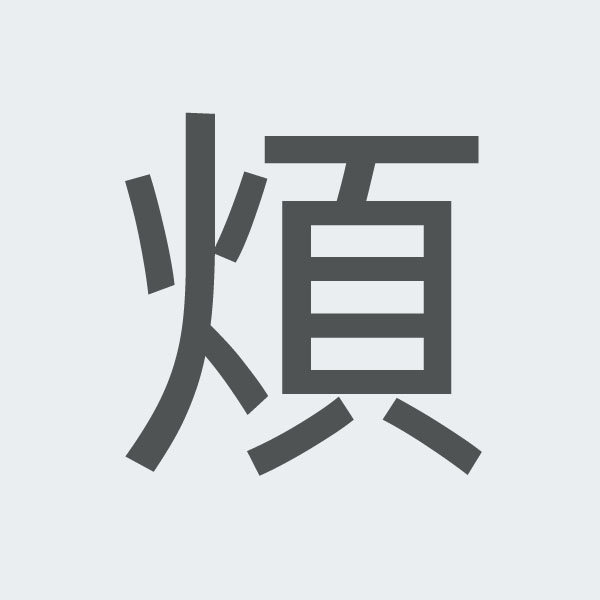
Kanji Breakdown: 煩
Core Meaning: Annoyance, trouble, worry; tedious; to bother
Reading: ハン (han) / ぼん (bon) / わずら・う (wazurau)
Structure Analysis:
火 (fire): heat/irritation
頁 (head): person/mind
Character depicts "heated mind" - mental agitation and irritation.
Essential Vocabulary & Usage
1. 煩い (うるさい・urusai) - Noisy, annoying
"The construction noise is really annoying."
工事の音がとても煩い。
2. 煩わす (わずらわす・wazurawasu) - To trouble, bother
"Sorry to trouble you with this request."*
この件でご煩わして申し訳ありません。
3. 煩悩 (ぼんのう・bonnō) - Earthly desires (Buddhism)
"Humans are bound by 108 earthly desires."
人間は108の煩悩に縛られている。
4. 煩雑 (はんざつ・hanzatsu) - Complicated, tedious
"The paperwork is too complicated."*
手続きが煩雑すぎる。
Key Insight
煩 represents mental burden and irritation - ranging from daily annoyances to deep spiritual afflictions. It appears in both secular contexts (complaints about noise/complexity) and religious terminology (Buddhist desires). The character consistently conveys the psychological weight of troubles rather than physical difficulties.
*Stroke Order: 13 strokes - write 火 first, then 頁 component.*