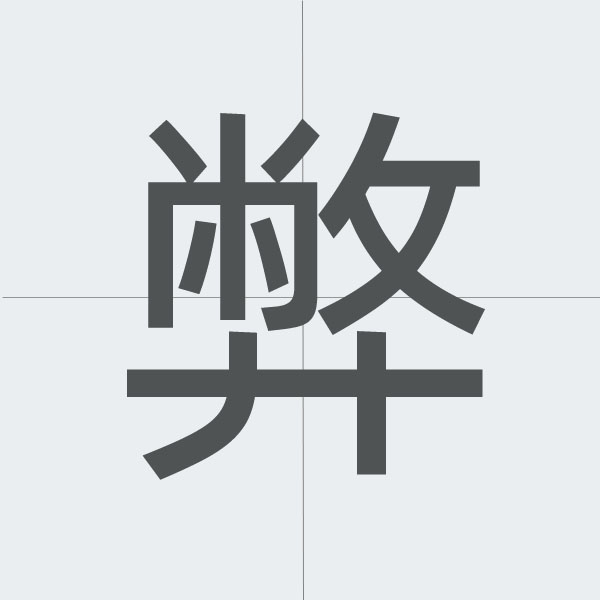
Kanji: 弊 (Abuse/Evil)
The kanji 弊 conveys meanings of "abuse," "evil," "harm," or refers to something that is "outdated" or a "humble term for one's own organization." It often denotes negative effects, corrupt practices, or is used formally in a self-deprecating context.
Key Reading:
On-yomi (Sino-Japanese reading): ヘイ (hei)
Common Words & Usage:
弊社 (heisha) - Noun. Our company (humble).
弊害 (heigai) - Noun. Evil, harmful effect.
作弊 (sakuhei) - Noun. Fraud, corrupt practices.
疲弊 (hihei) - Noun/Suru-verb. Exhaustion, depletion.
Example Sentence:
Japanese: 弊社の新しい製品を紹介させてください。
Romaji: Heisha no atarashii seihin o shōkai sasete kudasai.
English: Please allow me to introduce our company's new product.
Learning the correct stroke order for kanji like 弊 is essential for balanced, legible Japanese handwriting and is a fundamental part of mastering kanji writing.