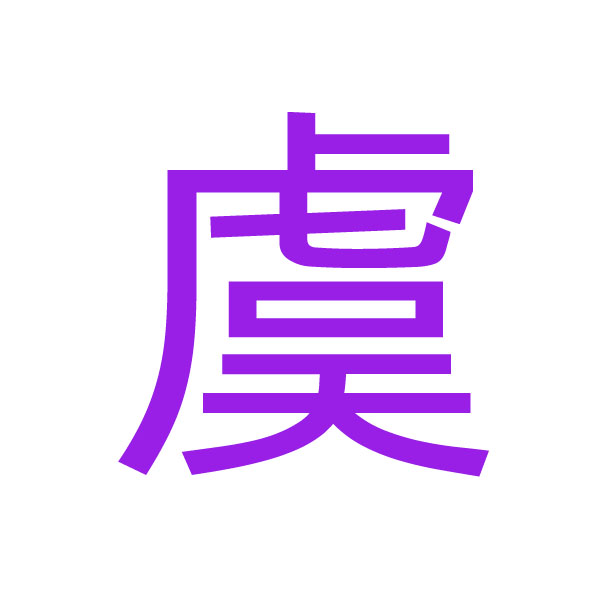
1. Kanji Breakdown: 虞
This kanji represents a sense of apprehension about potential future events.
Meaning: Fear, apprehension, uneasiness; risk, possibility (of something negative); concern.
Reading:
Onyomi (Sino-Japanese reading): グ (gu)
Kunyomi (Native Japanese reading): おそれ (osore), おそれ (られる) (osore(rareru))
The kanji is a phono-semantic compound (形声文字). Its traditional form consists of two parts:
Top (虍): The "tiger" radical, representing something fearsome or dangerous.
Bottom (吴): A phonetic component related to "entertain" but here providing sound.
The character originally meant "to be apprehensive in the face of a tiger," vividly capturing the feeling of facing a potential danger. This evolved into its modern meanings of fear, risk, and concern about something that might happen.
2. Stroke Order and Writing
Learning the correct stroke order is crucial for balanced and beautiful kanji. "虞" has 13 strokes.
Here is the stroke order diagram and explanation:
Total Strokes: 13
Start with the top "虍" (tiger) radical:
Then, write the bottom "呉":
Key Writing Tips:
Write from top to bottom, left to right
The "虍" radical should be wide enough to cover the components below
The bottom "呉" should be centered and balanced
Pay special attention to the stroke order of the "口" and "ハ" components
3. Vocabulary and Example Sentences
Here are some common words using "虞" and how to use them in sentences.
Vocabulary
虞 (おそれ, osore)
Meaning: Fear, apprehension, risk (of something bad happening)
Example: 大雨で洪水の虞があります。
Romaji: Ōame de kōzui no osore ga arimasu.
English: There is a risk of flooding due to heavy rain.
懸念 (けねん, ken'en)
Meaning: Concern, anxiety, apprehension (more common synonym)
Example: 経済への影響が懸念される。
Romaji: Keizai e no eikyō ga ken'en sareru.
English: There is concern about the impact on the economy.
虞犯 (ぐはん, guhan)
Meaning: Pre-delinquency, potential criminal behavior
Example: 虞犯少年に対する指導が重要だ。
Romaji: Guhan shōnen ni taisuru shidō ga jūyō da.
English: Guidance for pre-delinquent juveniles is important.
不虞 (ふぐ, fugu)
Meaning: Unexpected event, contingency
Example: 不虞の事態に備える。
Romaji: Fugu no jitai ni sonaeru.
English: Prepare for unexpected situations.
Summary
Kanji: 虞
Core Meaning: Fear, Apprehension, Risk, Possibility (of something negative)
Readings: On'yomi グ (gu), Kun'yomi おそれ (osore)
Stroke Order: 13 strokes. Remember it's composed of 虍 (tiger) and 呉 components
This kanji is essential for expressing concerns about potential risks and negative outcomes. While somewhat formal, it's important in written Japanese, news reports, and official contexts. By mastering its stroke order and vocabulary, you'll be able to correctly write and use this character that captures the important concept of risk assessment.