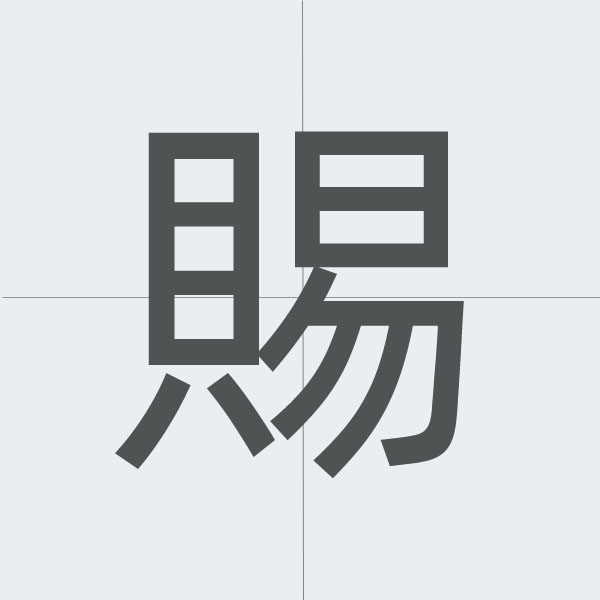
The Kanji: 賜 (Shi / Tama)
The kanji 賜 (read as shi or tama) carries a formal and respectful meaning of "to bestow," "to grant," or "a gift from a superior." It is composed of the radical for "money/barter" (貝) and the phonetic component "易," together conveying the idea of a valuable item being granted by someone of high status. This character implies honor and gratitude for receiving something.
Common Words & Example Sentences
1. 賜う (tamau)
Meaning: To receive (humbly from a superior); to be honored with. This is a very humble and formal verb.
Example Sentence: お言葉を賜り、光栄に存じます。
(O-kotoba o tamawari, kōei ni zonjimasu.)
"I am honored to receive your kind words."
2. 恩賜 (onshi)
Meaning: An imperial gift; a bestowal from the emperor.
Example Sentence: その公園は恩賜の庭園です。
(Sono kōen wa onshi no teien desu.)
"That park is an imperially granted garden."
3. 賞賜 (shōshi)
Meaning: A reward; a bestowal of an award.
Example Sentence: 功績に対して賞賜が与えられた。
(Kōseki ni taishite shōshi ga ataerareta.)
"A reward was bestowed for his achievements."
In summary, 賜 is a formal kanji used in respectful or official contexts to describe the act of receiving a gift, favor, or words from someone of higher status, such as a superior, customer, or the emperor. It conveys a strong sense of gratitude and honor.