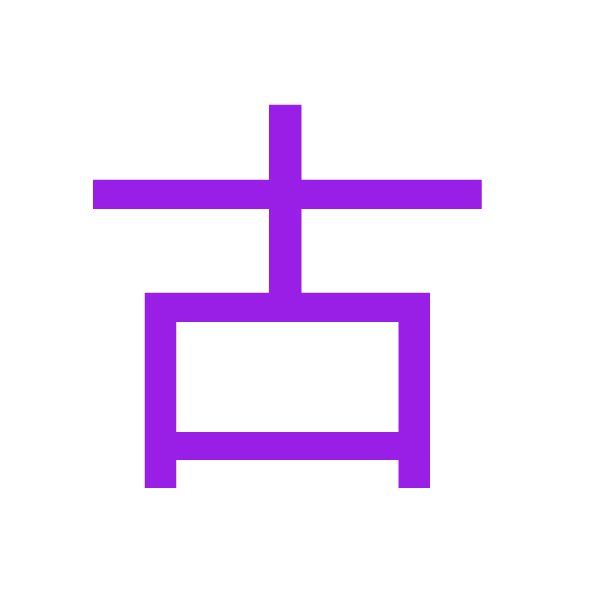
The Kanji: 古 (Furu.i/Ko) - The "Old" Kanji
1. Meaning and Usage
Core Meanings: Old; ancient; used; antique
Readings:
Kun'yomi (Japanese reading): ふる.い (furu.i)
On'yomi (Chinese reading): コ (ko)
Common Words and Compounds:
古い (ふるい / furui) - Old; ancient
古代 (こだい / kodai) - Ancient times
中古 (ちゅうこ / chūko) - Used; secondhand
古本 (ふるほん / furuhon) - Used book
考古学 (こうこがく / kōkogaku) - Archaeology
2. Writing and Stroke Order: The Preserved Skull
The correct kanji writing for "古" follows a simple but meaningful structure.
Stroke Order:
Stroke 1: A long horizontal stroke from left to right
Stroke 2: A short vertical stroke on the left
Stroke 3: A short vertical stroke on the right
Stroke 4: A short horizontal stroke inside
Stroke 5: A vertical折 through the center
Stroke 6: A final long horizontal stroke closing the base
Significance of Correct Kanji Writing:
Enclosure Structure: Follows the "create frame first" principle
Balance: The character should appear solid and well-proportioned
Internal Organization: The central十字 shape creates stability
3. Historical Origin and Evolution
The history of "古" reveals a profound connection between mortality, memory, and the passage of time.
Oracle Bone Script (甲骨文字):
The earliest form depicted a skull or skeleton with:
A distinctive cranial shape
Sometimes with markings representing decomposition
The concept of something that has endured through time
Bronze Script (金文):
The form became more stylized, emphasizing the preserved, enduring nature of ancient remains.
Seal Script (篆書):
The character evolved into a more abstract form, with the skull shape transforming into the enclosed structure we recognize today.
Modern Form (楷書):
The modern "古" maintains the solid, enclosed structure while standardizing the strokes.
Conceptual Evolution:
The character's meaning developed through powerful associations:
Ancient Remains → Great Age and Antiquity
Physical Decay → Passage of Time
Preserved Objects → Tradition and Heritage
Original Meaning:
The character originally represented "bones that have endured through ages" or "ancient preserved remains," symbolizing:
The ultimate evidence of age
Objects that have withstood the test of time
Physical proof of ancient existence
Cultural Significance:
In Japanese culture, "古" carries deep philosophical meanings:
Respect for Tradition: Values ancient wisdom and heritage
Historical Consciousness: Appreciation for historical continuity
Practical Recycling: 中古 culture emphasizes reuse and sustainability
Archaeological Interest: Strong tradition of preserving ancient artifacts
The character embodies the Japanese appreciation for both the practical value of used items and the spiritual value of ancient traditions.
Summary
The kanji "古" represents a profound meditation on time, preservation, and continuity. Beginning as a pictogram of ancient human remains - the most tangible evidence of age and mortality - it evolved to encompass all things old, traditional, and enduring. Mastering its stroke order and solid structure teaches important principles of Japanese kanji writing. When you learn how to write kanji like "古," you're engaging with a character that connects the most fundamental human awareness of mortality with the cultural appreciation for heritage and tradition. This character serves as a powerful reminder that our understanding of "old" is deeply rooted in the physical evidence of time's passage - from the ancient bones that witnessed earlier eras to the used books and artifacts that carry stories of previous owners. "古" continues to represent both the philosophical concept of antiquity and the practical reality of recycled objects in modern Japanese life, beautifully bridging the sacred and the mundane in its representation of time's enduring legacy.