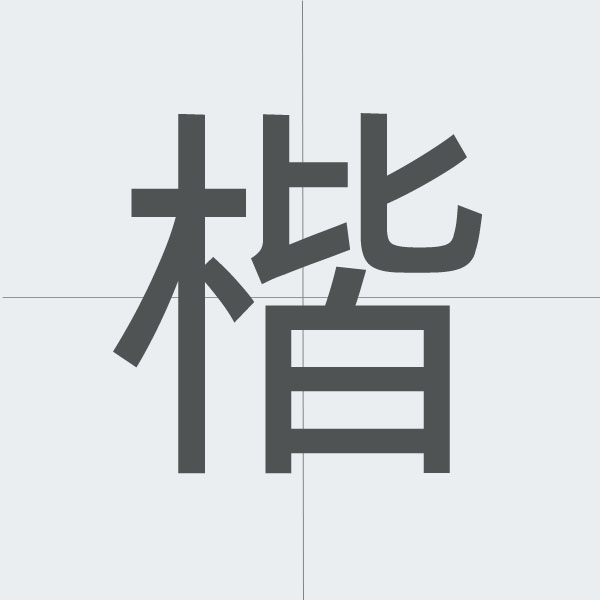
The Kanji: 楷 (Kai)
The kanji 楷 (read as kai) primarily means "model," "pattern," or "standard form." It is composed of the wood radical (木) and the component 皆 (all, everyone), suggesting a "wooden model" or a standard for all to follow. In its most specific and important usage, it refers to a fundamental style of Chinese and Japanese calligraphy.
Common Words & Example Sentences
1. 楷書 (kaisho)
Meaning: Block script; regular script (in calligraphy). This is the standard, clear, and easily readable style of writing kanji, where each stroke is distinct and separate.
Example Sentence: この看板は楷書で書かれている。
(Kono kanban wa kaisho de kakarete iru.)
"This sign is written in block script."
2. 楷書体 (kaishotai)
Meaning: The block script font/style (in printing or digital typography).
Example Sentence: 正式な文書には楷書体がよく使われる。
(Seishiki na bunsho ni wa kaishotai ga yoku tsukawareru.)
"The block script font is often used for formal documents."
3. 楷梯 (kaitei) - Rare
Meaning: A model; a paradigm (a classical, rarely used term).
Example Sentence: 彼の行動は社会人の楷梯だ。
(Kare no kōdō wa shakajin no kaitei da.)
"His conduct is a model for working adults."
In summary, 楷 is a specialized kanji that overwhelmingly represents the concept of a formal standard or model, most famously the block script (楷書) in calligraphy and typography. It embodies clarity, order, and the correct, standardized form.