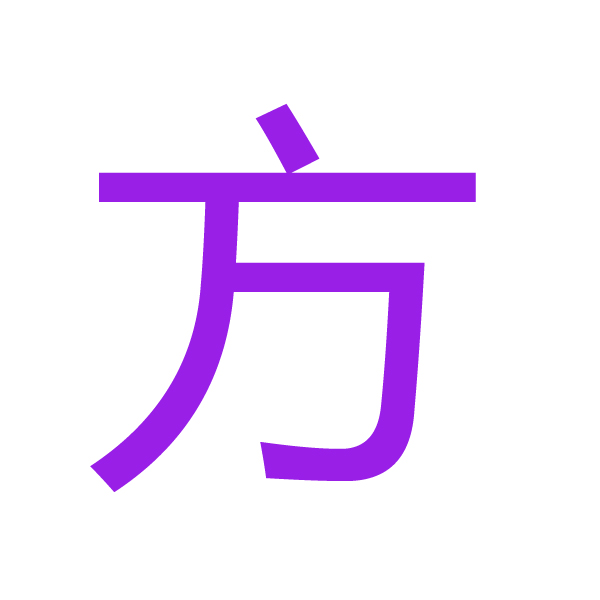
The Kanji: 方 (Kata/Hō) - The "Direction" Kanji
1. Meaning and Usage
Core Meanings: Direction; way; method; person (polite); side
Readings:
Kun'yomi (Japanese reading): かた (kata)
On'yomi (Chinese reading): ホウ (hō)
Common Words and Compounds:
方 (かた / kata) - Way; method; person (polite)
方法 (ほうほう / hōhō) - Method; way
方向 (ほうこう / hōkō) - Direction
一方 (いっぽう / ippō) - On the other hand
仕方 (しかた / shikata) - Way of doing
2. Writing and Stroke Order: The Plow and Direction
The correct kanji writing for "方" is relatively simple but requires precision in stroke angles and proportions.
Stroke Order:
Stroke 1: A right dot
Stroke 2: A short horizontal stroke
Stroke 3: A left-falling stroke
Stroke 4: A horizontal折 (or) stroke
Significance of Correct Kanji Writing:
Angle Precision: The left-falling stroke (3) should have a clear diagonal angle
Balance: The horizontal折 stroke (4) should extend appropriately to balance the character
Proportions: The top dot and horizontal should be compact, allowing space for the lower elements
3. Historical Origin and Evolution
The history of "方" reveals an agricultural origin that evolved into abstract directional concepts.
Oracle Bone Script (甲骨文字):
The earliest form depicted an agricultural plow with:
A handle at the top
The main blade or share
Sometimes included the person operating it
Bronze Script (金文):
The form became more stylized, emphasizing the plow's distinctive shape while simplifying the details.
Seal Script (篆書):
The character evolved into a more abstract form, with the plow shape transforming into the angular structure we recognize today.
Modern Form (楷書):
The modern "方" maintains the angular structure while standardizing the strokes.
Conceptual Evolution:
The connection between "plow" and "direction" comes from practical agricultural observations:
A plow creates straight furrows in specific directions
It establishes orientation and alignment in fields
The tool literally "points the way" for planting
This evolved from physical direction to abstract concepts of method and approach
Cultural Significance:
In Japanese culture, "方" carries multiple important functions:
Politeness: Used as an honorific suffix for people (e.g., 先生方 - teachers)
Methodology: Central to discussing techniques and approaches
Comparison: Used in comparative structures (一方 - on one hand)
Navigation: Essential for discussing directions and orientation
The character beautifully connects ancient agricultural practice with modern abstract thinking.
Summary
The kanji "方" represents a fascinating evolution from agricultural tool to abstract concept. Beginning as a pictogram of a farming plow that literally "showed the way" through field cultivation, it evolved to represent all forms of direction, method, and approach. Mastering its stroke order and angular structure teaches fundamental principles of Japanese kanji writing. When you learn how to write kanji like "方," you're engaging with a character that bridges concrete physical tools with abstract philosophical concepts. This character serves as a perfect example of how everyday practical objects in ancient life became the foundation for complex ideas about methodology, direction, and social interaction in modern Japanese language and thought.