3. Historical Origins and Etymology (The "Story" Behind the Kanji)
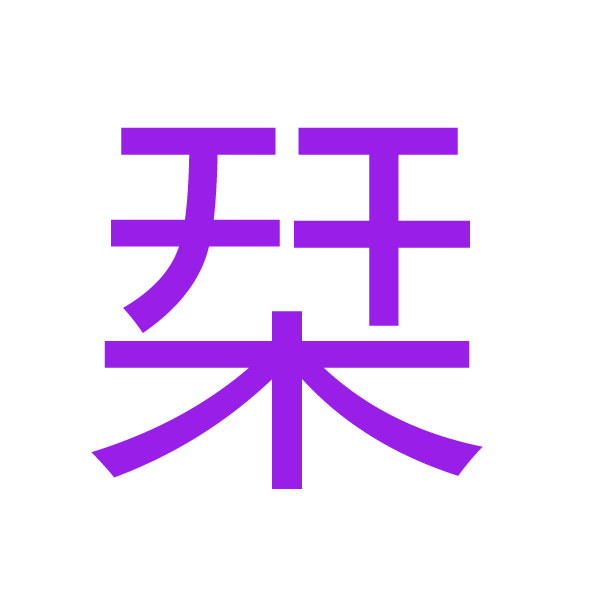
The history of 栞 is a beautiful example of an ideographic compound (会意文字 kaii moji), where the meaning is logically and poetically derived from its parts.
Let's break down its two components:
木 (Ki): This character means "tree" or "wood."
干 (Kan): This character means "to dry," but its original pictograph is of a "shield." More importantly for 栞, it can represent something that "protrudes" or sticks out.
The Combined Meaning:
The character 栞 creates a vivid and rustic image:
"A piece of wood (木) that is placed so it sticks out (干)."
Imagine walking through a forest and breaking a small branch on a tree, bending it to point in a certain direction. This acted as a "trail marker" to guide your way back or to show the path to others. This piece of wood, protruding from the tree, is the original 栞.
From this concrete image, the meaning expanded metaphorically:
From a trail marker in nature...
...to a bookmark in a book (a piece of paper or card that "sticks out" to mark your place)...
...and further to a guidebook (which acts as a marker and guide for your journey through an unfamiliar place).
The character perfectly encapsulates the idea of a simple, physical object that serves as a guide and a reminder of one's place.
4. Example Sentences
Here are some example sentences showing the use of 栞.
As "Bookmark":
Romaji: Kono utsukushii happa o shiori to shite tsukau.
English: I use this beautiful leaf as a bookmark.
この美しい葉っぱを栞として使う。
As a Verb Phrase:
Romaji: Yomikake no pēji ni shiori o hasanda.
English: I put a bookmark on the page I was reading.
読みかけのページに栞を挟んだ。
As a Name:
Romaji: Shiori-san wa yasashii hito desu.
English: Shiori is a kind person.
栞さんは優しい人です。
Summary
Meaning: Bookmark, guidebook, trail marker.
Writing: 10 strokes. Write the left "tree" radical 木 first, then the right "protrude/dry" component 干.
Origin: An ideographic compound. It combines 木 (tree/wood) and 干 (to protrude) to represent a "piece of wood placed to stick out as a marker." This was the original "trail marker" in nature, a meaning which later evolved poetically to include bookmarks and guidebooks. The character carries a sense of guidance, memory, and gentle navigation.