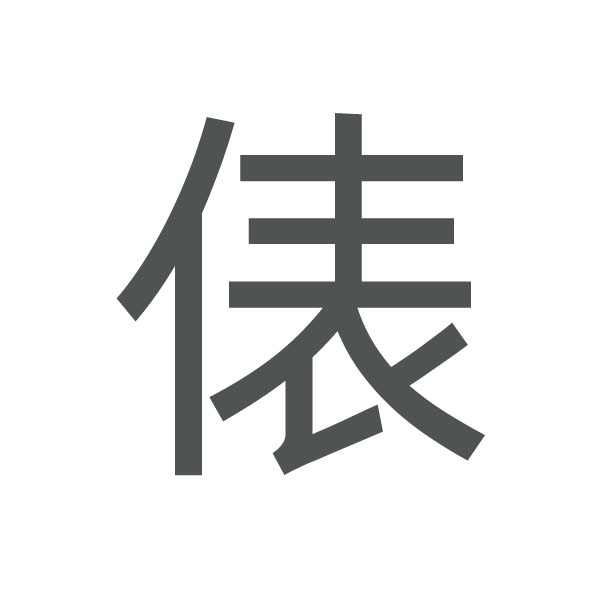
1. Kanji Breakdown: 俵
This kanji represents a specific unit of measurement and the object used for it.
Meaning: Straw rice bag; a unit of volume/weight for rice (approx. 60 kg).
Reading:
Onyomi (Sino-Japanese reading): ヒョウ (hyou)
Kunyomi (Native Japanese reading): たわら (tawara)
The kanji is a phono-semantic compound (形声文字). It consists of two parts:
Left (亻): This is the "person" radical (にんべん).
Right (表): This means "to express" or "surface," and here it primarily provides the sound ("hyou").
The character's connection to a rice bag is interesting. One theory suggests that a "person (亻)" would use a straw bag to "express/show (表)" their wealth or status, as rice was a form of currency and measure of wealth in historical Japan. The character became strongly associated with the straw bag itself and the standard unit of measurement it represented.
2. Stroke Order and Writing
Learning the correct stroke order is crucial for balanced and beautiful kanji. "俵" has 10 strokes.
Here is the stroke order diagram and explanation:
Total Strokes: 10
Start with the left radical "亻" (person radical):
Then, write the right part "表":
Key Writing Tips:
Write from left to right, top to bottom.
The left radical "亻" is narrow.
The right part "表" is wider. Pay attention to the final two strokes: the left-falling stroke and the final right-falling stroke (はね).
The overall character should be balanced and upright.
3. Vocabulary and Example Sentences
Here are some common words using "俵" and how to use them in sentences.
Vocabulary
俵 (たわら, tawara)
Meaning: Straw rice bag; a unit for rice (approx. 60 kg).
Example: 米俵を倉庫に運んだ。
Romaji: Kome tawara o sōko ni hakonda.
English: I carried the straw rice bags to the warehouse.
土俵 (どひょう, dohyou)
Meaning: Sumo wrestling ring.
Example: 力士が土俵に入った。
Romaji: Rikishi ga dohyou ni haitta.
English: The sumo wrestler entered the ring.
米俵 (こめだわら, kome dawara)
Meaning: Straw rice bag.
例文: 米俵一俵は約60キロだ。
Romaji: Kome dawara ippyō wa yaku rokujukkiro da.
English: One straw rice bag is about 60 kilograms.
一俵 (いっぴょう, ippyō)
Meaning: One tawara (one bag of rice).
Example: 収穫した米は一俵になった。
Romaji: Shūkaku shita kome wa ippyō ni natta.
English: The harvested rice amounted to one tawara.
俵にする (たわらにする, tawara ni suru)
Meaning: To sack, to put into bags.
Example: 収穫した米を俵にした。
Romaji: Shūkaku shita kome o tawara ni shita.
English: We sacked the harvested rice.
Summary
Kanji: 俵
Core Meaning: Straw Rice Bag; A Unit for Rice (~60 kg).
Readings: On'yomi ヒョウ (hyou), Kun'yomi たわら (tawara)
Stroke Order: 10 strokes. Remember it's composed of 亻 (person) and 表 (express/sound). Practice writing it step-by-step to master its form.
This kanji is deeply connected to Japanese history, agriculture, and traditional culture (especially sumo). While less common in everyday modern language, it remains essential for understanding these cultural contexts. By mastering its stroke order and vocabulary, you will be able to correctly write and use this unique character.