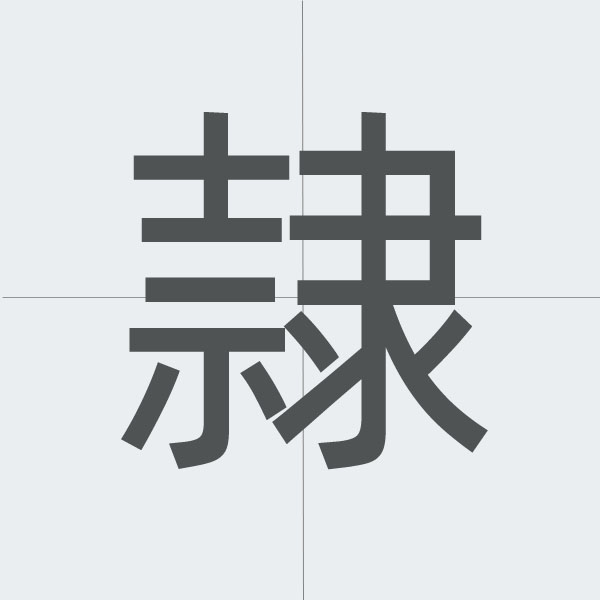
The Kanji: 隷 (Rei)
The kanji 隷 means "slave," "servant," or "subordinate." It combines 柰 (fruit tree) with 隶 (capture), originally depicting captured people forced to harvest fruit. This character represents subjugation and servitude.
Common Words & Example Sentences
1. 奴隷 (dorei) - Slave
古代社会では奴隷制度が存在した。
"Slavery existed in ancient societies."
2. 隷属 (reizoku) - Subordination
他国に隷属することを拒否する。
"Refuse to be subordinate to other nations."
3. 隷書 (reisho) - Clerical script
漢字の隷書を練習する。
"Practice the clerical script of kanji."
4. 直隷 (chokurei) - Direct control
皇帝直隷の軍隊。
"Army under the emperor's direct control."
In summary, 隷 describes servile relationships - from slavery (奴隷) and subjugation (隷属) to controlled systems (直隷), while also naming a historical writing style (隷書). It carries strong connotations of hierarchical control in Japanese.