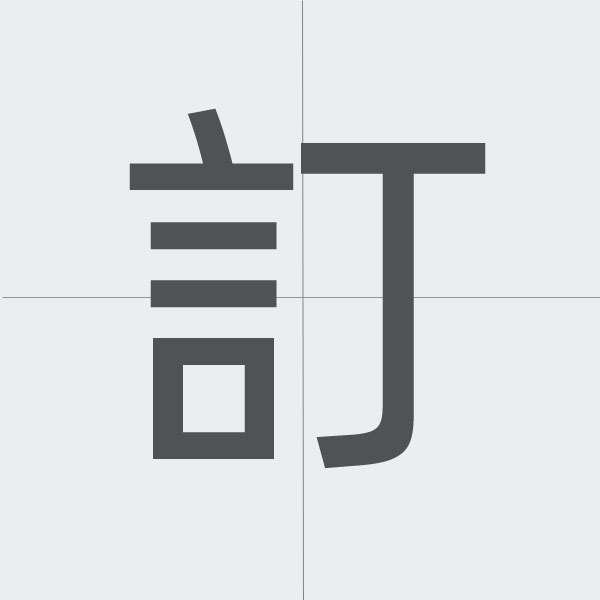
The Kanji: 訂 (Tei)
The kanji 訂 means "to correct," "to revise," or "to amend." It combines 言 (words) with 丁 (exact), representing the act of making verbal or written content precise. This character specifically refers to corrections and revisions.
Common Words & Example Sentences
1. 訂正 (teisei) - Correction
誤字を訂正する。
"Correct the character error."
2. 改訂 (kaitei) - Revision
教科書を改訂する。
"Revise the textbook."
3. 訂正箇所 (teisei kasho) - Points to correct
訂正箇所を赤で示す。
"Mark correction points in red."
4. 増訂 (zōtei) - Expanded edition
増訂版を出版する。
"Publish an expanded edition."
In summary, 訂 specifically describes the act of improving accuracy - from simple corrections (訂正) to systematic revisions (改訂) and enhanced editions (増訂). It's essential for editorial and academic contexts in Japanese.