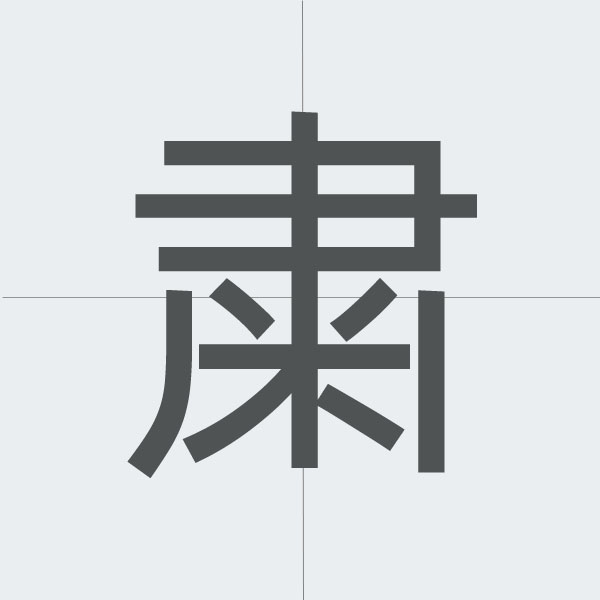
The Kanji: 粛 (Shuku)
The kanji 粛 means "solemn," "silent," or "purge." It originally depicted ritual purification, combining elements representing reverence and restraint. This character describes both solemn dignity and elimination of impurities.
Common Words & Example Sentences
1. 粛々 (shukushuku) - Solemnly
式典が粛々と進行する。
"The ceremony proceeds solemnly."
2. 粛清 (shukusei) - Purge
反対派を粛清する。
"Purge opposition factions."
3. 厳粛 (genshuku) - Grave
厳粛な雰囲気が漂う。
"A grave atmosphere prevails."
4. 自粛 (jishuku) - Self-restraint
外出を自粛する。
"Refrain from going out."
In summary, 粛 describes solemn dignity (粛々, 厳粛), political purges (粛清), and voluntary restraint (自粛). It carries connotations of both reverence and elimination in Japanese.