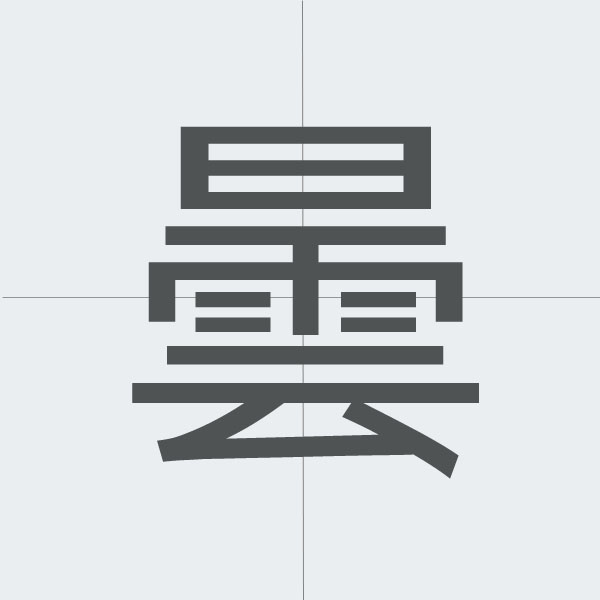
The Kanji: 曇 (Don / Kumo)
The kanji 曇 means "cloudy," "overcast," or "to become dim." It combines 日 (sun) with 雲 (cloud), depicting the sun being covered by clouds. This character represents obscured weather and blurred clarity.
Common Words & Example Sentences
1. 曇り (kumori) - Cloudy weather
今日は曇りのち雨です。
"Today will be cloudy followed by rain."
2. 曇天 (donten) - Overcast sky
曇天が続く。
"The overcast sky continues."
3. 曇る (kumoru) - To become cloudy
窓ガラスが曇る。
"The window glass fogs up."
4. 曇りガラス (kumori garasu) - Frosted glass
曇りガラスで仕切る。
"Divide with frosted glass."
In summary, 曇 describes weather conditions (曇り, 曇天), the process of obscuring (曇る), and translucent materials (曇りガラス). It's essential for meteorological and visual descriptions in Japanese.