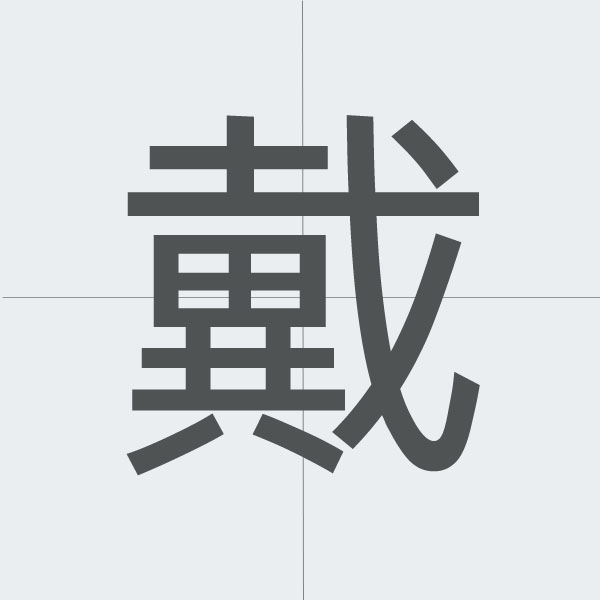
The Kanji: 戴 (Tai / Itada)
The kanji 戴 means "to receive humbly," "to be honored with," or "to crown." It combines 異 (different) with 戈 (spear), originally depicting receiving a ceremonial weapon from a superior. This character represents respectful reception and honor.
Common Words & Example Sentences
1. 戴く (itadaku) - To receive humbly
勲章を戴く。
"Humbly receive a medal."
2. 頂戴 (chōdai) - Please give me
お水を頂戴。
"May I have some water, please?"
3. 戴冠 (taikan) - Coronation
女王の戴冠式が行われる。
"The queen's coronation ceremony takes place."
4. 拝戴 (haitai) - Humble reception
勲記を拝戴する。
"Respectfully receive the certificate of merit."
In summary, 戴 describes formal, humble reception - from receiving honors (戴く, 拝戴) and making polite requests (頂戴) to royal ceremonies (戴冠). It embodies deep respect in Japanese social interactions.