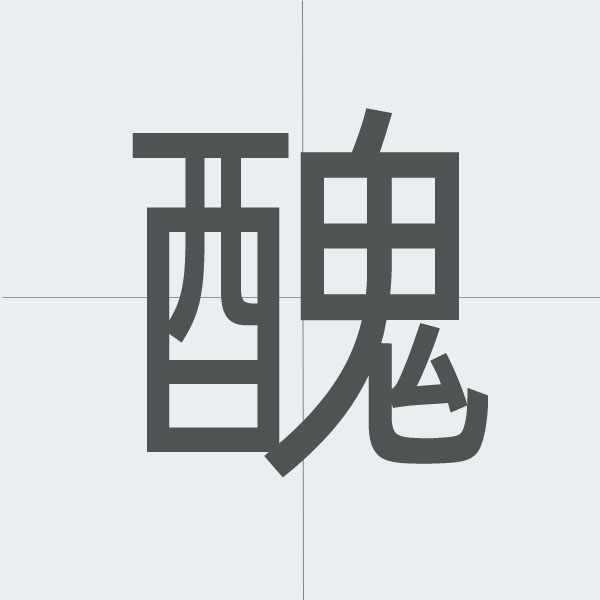
The Kanji: 醜 (Shū / Miniku)
The kanji 醜 (read as shū or miniku) carries the core meaning of "ugly," "unsightly," or "shameful." It is composed of the radical 酉 (which represents a wine vessel or alcohol) combined with 鬼 (ogre, demon). This structure evokes the image of a distorted, monstrous appearance, as if one's true, ugly nature is revealed, much like a hidden demon emerging.
Common Words & Example Sentences
1. 醜い (minikui)
Meaning: Ugly; unsightly.
Example Sentence: 彼は醜い喧嘩をした。
(Kare wa minikui kenka o shita.)
"They had an ugly (shameful) fight."
2. 醜態 (shūtai)
Meaning: An unsightly figure; a disgraceful spectacle.
Example Sentence: 酔って醜態をさらした。
(Yotte shūtai o sarashita.)
"He got drunk and made a disgraceful spectacle of himself."
3. 醜聞 (shūbun)
Meaning: Scandal.
Example Sentence: その政治家は醜聞で辞任した。
(Sono seijika wa shūbun de jinin shita.)
"That politician resigned due to a scandal."
In summary, 醜 is a potent kanji used to describe both physical unattractiveness (醜い) and, more powerfully, shameful behavior or disgraceful situations, as seen in words for scandal (醜聞) and disgraceful scenes (醜態).