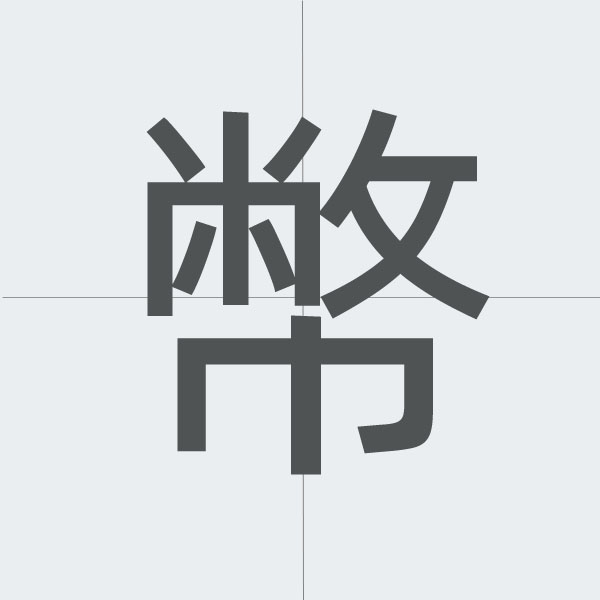
The Kanji: 幣 (Hei / Nusa)
The kanji 幣 means "currency," "offerings," or "shrine ritual objects." It combines 巾 (cloth) with 敝 (worn-out), originally depicting cloth strips used in rituals. This character represents both monetary and spiritual value.
Common Words & Example Sentences
1. 紙幣 (shihei) - Paper currency
新しい千円紙幣が発行された。
"New 1000-yen banknotes were issued."
2. 貨幣 (kahei) - Coinage
古代貨幣を収集する。
"Collect ancient coins."
3. 弊社 (heisha) - Our company (humble)
弊社の製品をご覧ください。
"Please look at our company's products."
4. 幣束 (heisoku) - Ritual wand
神前に幣束を捧げる。
"Offer ritual wands at the shrine."
In summary, 幣 spans financial (紙幣, 貨幣) and ritual (幣束) domains, while also serving in business humility (弊社). It uniquely connects economic and spiritual exchange in Japanese culture.