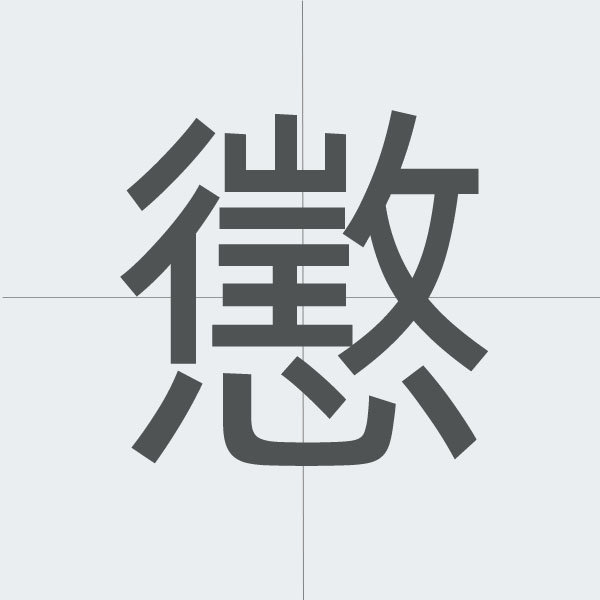
The Kanji: 懲 (Chō / Ko)
The kanji 懲 means "to punish," "to discipline," or "to learn a lesson." It combines 徴 (evidence) with 心 (heart), originally depicting the psychological impact of punishment. This character represents corrective discipline and experiential learning.
Common Words & Example Sentences
1. 懲りる (koriru) - To learn from experience
失敗して懲りる。
"Learn one's lesson from failure."
2. 懲罰 (chōbatsu) - Punishment
規則違反に懲罰を与える。
"Administer punishment for rule violations."
3. 懲役 (chōeki) - Imprisonment
三年の懲役を言い渡される。
"Sentenced to three years imprisonment."
4. 懲戒 (chōkai) - Disciplinary action
職員に懲戒処分を下す。
"Take disciplinary action against staff."
In summary, 懲 describes corrective measures - from personal learning (懲りる) and institutional penalties (懲罰, 懲戒) to judicial sentences (懲役). It encompasses both personal and formal discipline in Japanese society.