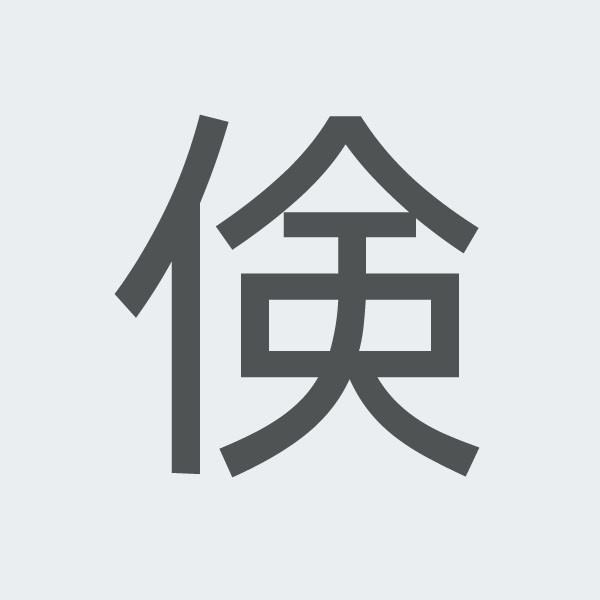
1. Kanji Breakdown: 倹
Meaning: Thrift, frugality, economy.
Reading:
Onyomi (Sino-Japanese reading): ケン (ken)
Kunyomi (Native Japanese reading): None in common modern use.
The kanji is a phono-semantic compound (形声文字). It consists of two parts:
Left (亻): The "person" radical (にんべん).
Right (僉): A simplified form of a component meaning "all" or "together," which primarily provides the sound ("ken").
The core concept is a "person who gathers and manages all resources together carefully." This imagery of carefully consolidating and not wasting resources evolved directly into the meaning of "frugality" and "thrift."
2. Stroke Order and Writing (10 Strokes)
Correct stroke order is essential for balanced and legible kanji.
Stroke Order Diagram:
Start with the left radical "亻" (person radical):
Then, write the right part "僉":
Key Writing Tips:
Write from left to right, top to bottom.
The left radical "亻" is narrow.
The right part "僉" is complex. Break it down into the top (人), middle (一), and bottom (口) components.
The overall character should be balanced and upright.
3. Core Meanings & Example Sentences
Here are the primary meanings of "倹" with common vocabulary and practical example sentences.
A. Thrift / Frugality (けん)
倹約 (けんやく, ken'yaku)
Meaning: Thrift, frugality, economy.
Example: 倹約して、将来のために貯金する。
English: I save money for the future by practicing frugality.
節倹 (せっけん, sekken)
Meaning: Thriftiness, economizing (a more formal term similar to 倹約).
例文: 節倹を心がけて生活する。
Romaji: Sekken o kokorogakete seikatsu suru.
English: I live my life with thrift in mind.
B. In Compound Words
倹しい (つましい, tsumashii)
Meaning: Frugal, economical, modest (in lifestyle).
Example: 彼らは倹しい生活を送っている。
English: They lead a frugal life.
Summary
Kanji: 倹
Core Meaning: Thrift, Frugality, Economy.
Keyword: Economical Living.
Readings: On'yomi ケン (ken)
Stroke Order: 10 strokes. Structure: 亻 (person) + 僉 (phonetic).
This character is essential for discussing personal finance, saving money, and economical living in Japanese. It carries a very positive connotation of prudence and wise resource management. Mastering "倹" is key to understanding concepts of financial responsibility in Japanese culture.