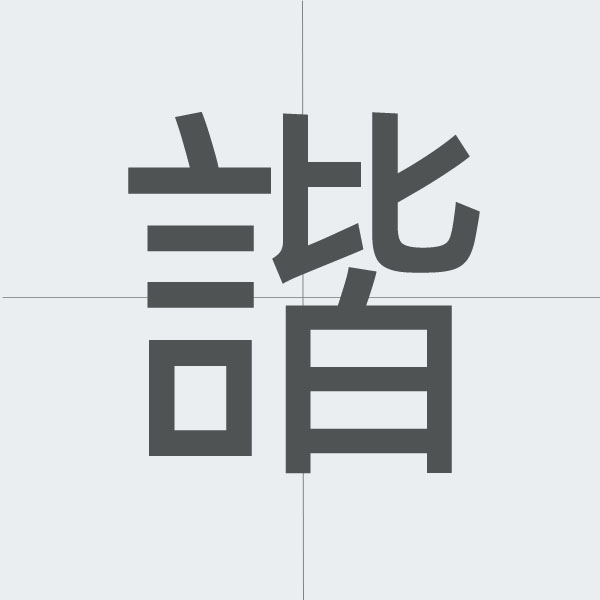
The Kanji: 諧 (Kai)
The kanji 諧 (read as kai) carries the core meanings of "harmony," "humor," and "to be in accord." It is composed of the radical 言 (speech, words) and 皆 (all, everyone), creating the idea of "everyone's words" being in agreement or creating a pleasant, harmonious atmosphere. This character beautifully connects the concepts of musical harmony, social accord, and lightheartedness.
Common Words & Example Sentences
1. 諧調 (kaichō)
Meaning: Harmony; concord (especially in tone or mood).
Example Sentence: 彼らの意見は見事に諧調している。
(Karera no iken wa migoto ni kaichō shite iru.)
"Their opinions are in perfect harmony."
2. 諧謔 (kaigyaku)
Meaning: Wit; pleasant jesting; humorous banter.
Example Sentence: 彼の諧謔を交えたスピーチは人気がある。
(Kare no kaigyaku o majieta supīchi wa ninki ga aru.)
"His speeches, laced with wit, are very popular."
3. 諧調音 (kaichōon)
Meaning: A harmonious sound; a chord (in music).
Example Sentence: オーケストラから美しい諧調音が聞こえた。
(Ōkesutora kara utsukushii kaichōon ga kikoeta.)
"A beautiful harmonious sound came from the orchestra."
In summary, 諧 is an elegant and somewhat literary kanji that represents harmony in its broadest sense. It can describe agreement between people (諧調), witty and humorous language (諧謔), or pleasing sounds in music (諧調音), always carrying a positive connotation of things fitting together agreeably.