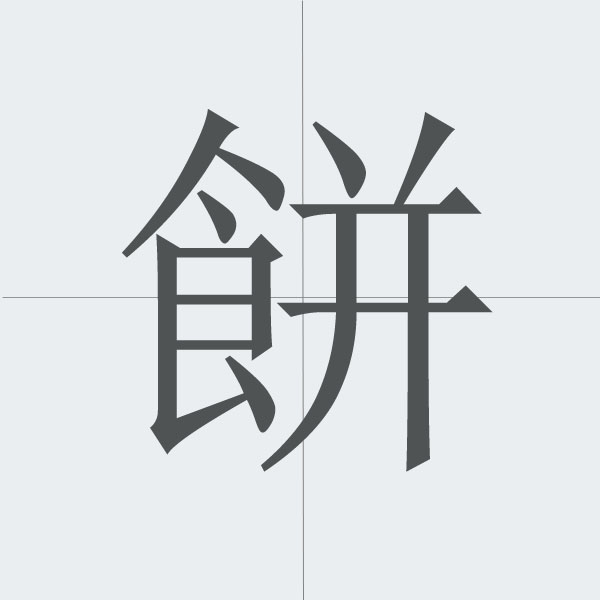
The Kanji: 餅 (Hei / Mochi)
The kanji 餅 specifically means "rice cake." It combines 食 (food) with 并 (combine), depicting the process of steaming and pounding glutinous rice into a cohesive food. This character represents one of Japan's most iconic traditional foods.
Common Words & Example Sentences
1. 餅 (mochi) - Rice cake
正月に餅を食べる。
"Eat rice cakes during New Year."
2. 焼き餅 (yakimochi) - Jealousy
彼は焼き餅を焼いている。
"He's burning with jealousy." (literally "grilling rice cakes")
3. 餅つき (mochitsuki) - Rice pounding
年末に餅つき大会を行う。
"Hold a rice-pounding event at year-end."
4. 歯固めの餅 (hagatame no mochi) - Ritual rice cake
お宮参りで歯固めの餅をもらう。
"Receive ritual rice cakes at the shrine visit."
In summary, 餅 embodies Japanese food culture - from the staple food itself (餅) and its preparation (餅つき) to metaphorical expressions (焼き餅) and ceremonial uses (歯固めの餅).