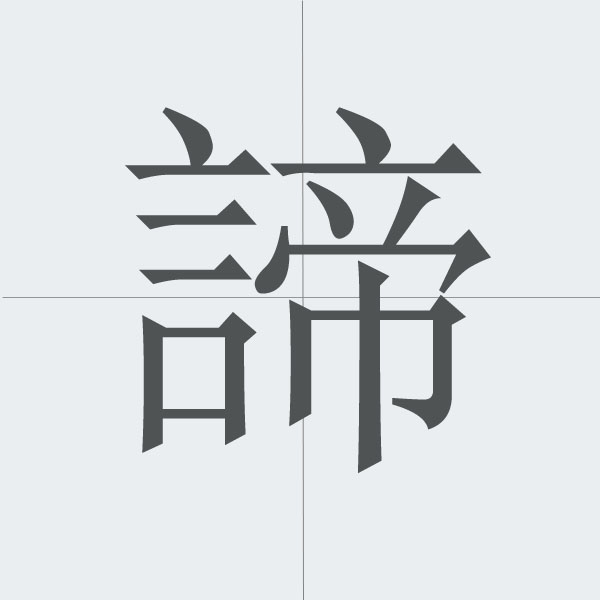
The Kanji: 諦 (Tei / Akira)
The kanji 諦 carries two distinct meanings: "to give up" and "clarity." It combines 言 (words/speech) with 帝 (emperor), originally denoting authoritative truth. This character represents both accepting reality and seeing things clearly.
Common Words & Example Sentences
1. 諦める (akirameru) - To give up
夢を諦めないで。
"Don't give up on your dream."
2. 諦観 (teikan) - Resignation
運命を諦観する。
"Accept one's fate with resignation."
3. 諦念 (teinen) - Renunciation
欲望を諦念する。
"Renounce worldly desires."
4. 諦めが悪い (akirame ga warui) - Poor at letting go
彼は諦めが悪い。
"He has trouble accepting defeat."
In summary, 諦 describes the psychological process of releasing attachments - from surrendering goals (諦める) and accepting fate (諦観) to philosophical detachment (諦念). It reflects the Buddhist influence on Japanese thought about non-attachment.