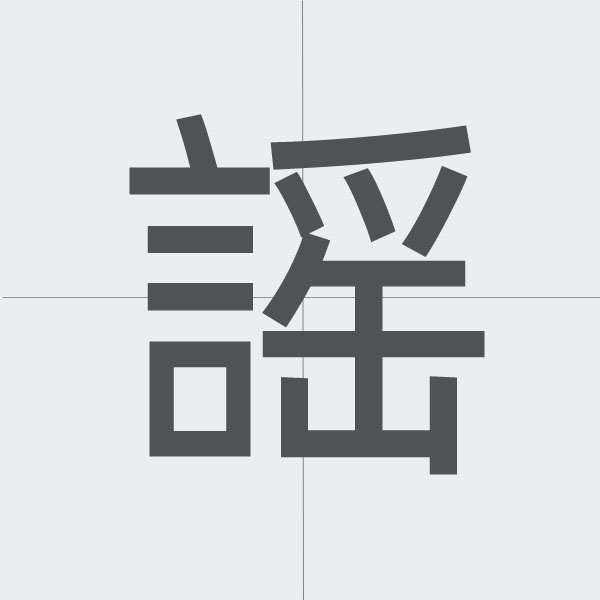
The Kanji: 謡 (Yō / Utai)
The kanji 謡 means "chant," "noh song," or "ballad." It combines 言 (words) with 䍃 (jar), originally depicting ceremonial songs rising like steam from a ritual vessel. This character specifically refers to traditional Japanese vocal performance.
Common Words & Example Sentences
1. 謡曲 (yōkyoku) - Noh chant
謡曲を習い始める。
"Begin learning Noh chanting."
2. 謡う (utau) - To chant
能楽師が謡う。
"The Noh performer chants."
3. 謡本 (utaihon) - Noh libretto
謡本を開いて練習する。
"Practice with the Noh libretto."
4. 京謡 (kyōutai) - Kyoto-style chant
京謡の先生に師事する。
"Study under a Kyoto-style chanting teacher."
In summary, 謡 is a specialized kanji for traditional chanting - from Noh performance (謡曲, 謡う) and its texts (謡本) to regional styles (京謡). It preserves Japan's classical performing arts vocabulary.