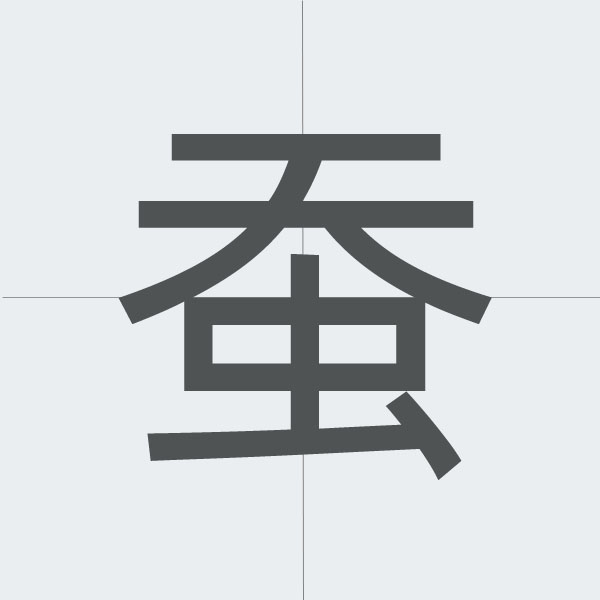
The Kanji: 蚕 (San / Kaiko)
The kanji 蚕 (read as san or kaiko) has one specific meaning: "silkworm." It is a pictographic character that visually represents a worm (虫) under the heavens (天), highlighting the ancient Chinese view of silkworm cultivation as a "heavenly" or divine industry crucial to their civilization. This character is intrinsically linked to the production of silk.
Common Words & Example Sentences
1. 蚕 (kaiko)
Meaning: Silkworm (the insect itself).
Example Sentence: 蚕が桑の葉を食べている。
(Kaiko ga kuwa no ha o tabete iru.)
"The silkworms are eating mulberry leaves."
2. 養蚕 (yōsan)
Meaning: Sericulture; silkworm cultivation.
Example Sentence: この地域はかつて養蚕が盛んだった。
(Kono chiiki wa katsute yōsan ga sakanda.)
"Sericulture was once thriving in this region."
3. 蚕糸 (sanshi)
Meaning: Silk thread; silk yarn.
Example Sentence: 蚕糸は高級な織物の原料です。
(Sanshi wa kōkyū na orimono no genryō desu.)
"Silk thread is the raw material for high-quality textiles."
In summary, 蚕 is a highly specialized kanji representing the silkworm and the entire industry surrounding it. It is essential in words related to silk production, from raising the insects (養蚕) to the thread they produce (蚕糸), reflecting its deep historical and cultural significance.