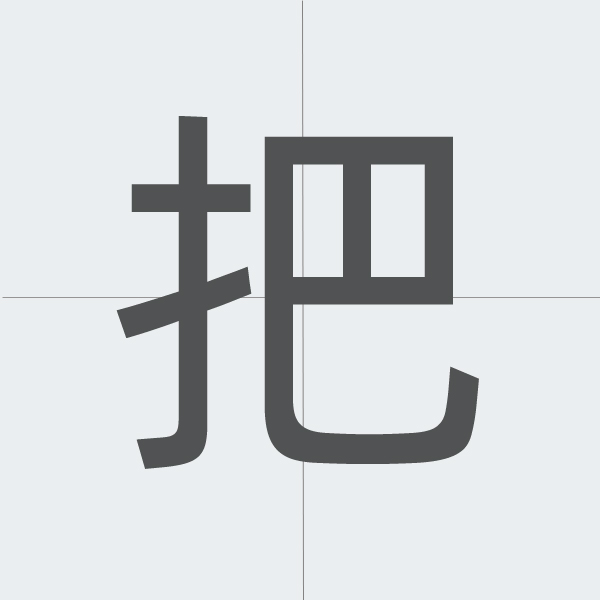
The Kanji: 把 (Ha / Wa)
The kanji 把 means "grasp," "bundle," or "handle." It combines 扌(hand) with 巴(coil), originally depicting a hand holding a coiled object. This character represents both physical grasping and conceptual understanding.
Common Words & Example Sentences
1. 把握 (haaku) - Comprehension
状況を把握する。
"Grasp the situation."
2. 把持 (haji) - Holding
しっかり把持する。
"Hold firmly."
3. 把り (watori) - Grip
良い把りの道具。
"A tool with good grip."
4. 束把 (sokuwa) - Bundle
書類を束把にする。
"Bundle the documents."
In summary, 把 describes physical and mental grasping - from understanding (把握) and physical holding (把持) to grip quality (把り) and bundling (束把). It connects concrete handling with abstract comprehension in Japanese.