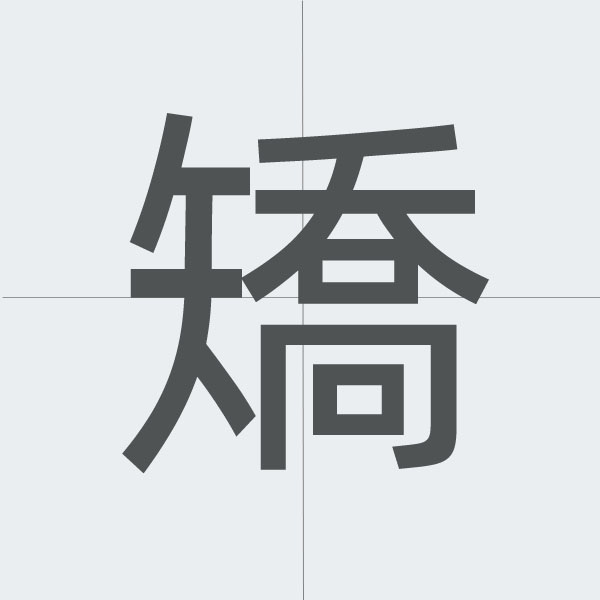
The Kanji: 矯 (Kyō / Tame)
The kanji 矯 (read as kyō or tame) carries the core meaning of "to correct," "to rectify," or "to straighten." It is composed of the radical 矢 (arrow) and 喬 (tall/high), creating the image of straightening a bent arrow to make it fly true. This character implies actively fixing something that is wrong, crooked, or improper.
Common Words & Example Sentences
1. 矯正 (kyōsei)
Meaning: Correction; rectification (e.g., of posture, teeth, or vision).
Example Sentence: 彼は歯の矯正をしている。
(Kare wa ha no kyōsei o shite iru.)
"He is undergoing teeth straightening."
2. 矯める (tameru)
Meaning: To correct; to reform; to straighten.
Example Sentence: 悪い癖を矯めなければならない。
(Warui kuse o tamenakereba naranai.)
"I must correct my bad habits."
3. 視力矯正 (shiryoku kyōsei)
Meaning: Vision correction.
Example Sentence: レーシック手術は視力矯正の方法の一つだ。
(Rēshiku shujutsu wa shiryoku kyōsei no hōhō no hitotsu da.)
"LASIK surgery is one method of vision correction."
In summary, 矯 is a kanji of improvement and rectification. It is used in contexts where something faulty is being set right, from medical and dental corrections (矯正) to the reforming of personal habits (矯める). It embodies the positive action of making something better.