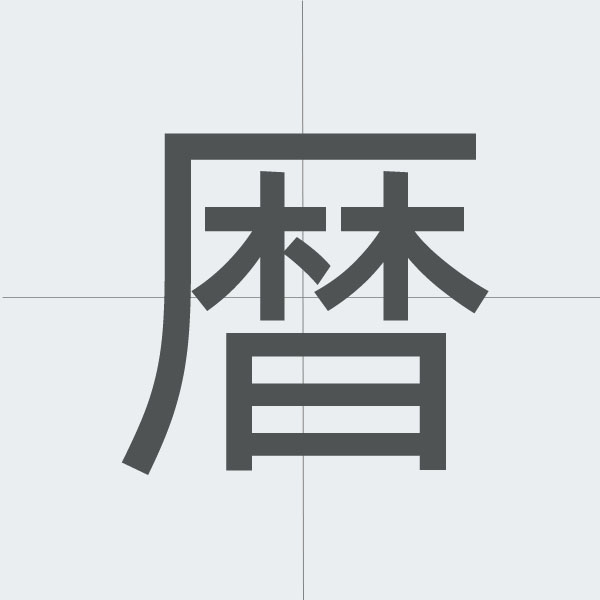
The Kanji: 暦 (Reki / Koyomi)
The kanji 暦 means "calendar," "almanac," or "chronology." It combines 日 (sun/day) with 厤 (arrange in order), originally depicting the orderly arrangement of days. This character represents timekeeping systems and chronological records.
Common Words & Example Sentences
1. 暦 (koyomi) - Calendar
壁に暦を掛ける。
"Hang a calendar on the wall."
2. カレンダー (karendā) - Calendar (modern usage)
スケジュールをカレンダーに書き込む。
"Write schedules on the calendar."
3. 旧暦 (kyūreki) - Lunar calendar
旧暦で正月を祝う。
"Celebrate New Year by the lunar calendar."
4. 暦年 (rekinen) - Calendar year
暦年で収入を計算する。
"Calculate income by calendar year."
In summary, 暦 describes time measurement systems - from physical calendars (暦) and traditional systems (旧暦) to annual periods (暦年). It's essential for temporal organization in Japanese culture.