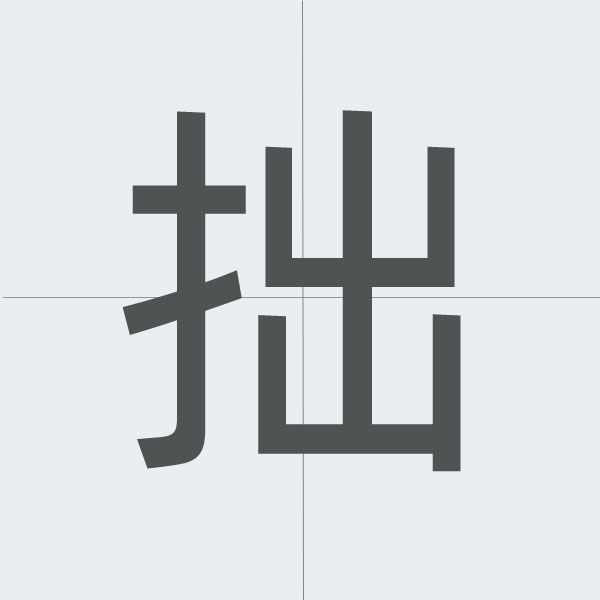
The Kanji: 拙 (Setsu / Tsutana)
The kanji 拙 (read as setsu or tsutana) carries the core meaning of "clumsy," "unskillful," or "poor." It is composed of the radical 扌(hand) and 出 (to go out), creating the idea of work that comes out poorly from one's hands. This character is often used in a humble or self-deprecating way to describe one's own actions or creations.
Common Words & Example Sentences
1. 拙い (mazui)
Meaning: Clumsy; poor; unskillful.
Example Sentence: 私の拙い英語で失礼します。
(Watashi no mazui Eigo de shitsurei shimasu.)
"Please excuse my poor English."
2. 拙速 (sessoku)
Meaning: Fast but clumsy; quick and dirty.
Example Sentence: 拙速を旨として作業を進めた。
(Sessoku o mune to shite sagyō o susumeta.)
"We proceeded with the work prioritizing speed over perfection (fast but rough)."
3. 拙者 (sessha)
Meaning: A humble first-person pronoun (I; my humble self), famously used by samurai in historical dramas.
Example Sentence: 拙者、参上!
(Sessha, sanjō!)
"I have arrived!"
4. 拙宅 (settaku)
Meaning: My humble house.
Example Sentence: よろしければ、拙宅へお越しください。
(Yoroshikereba, settaku e o-koshi kudasai.)
"If you like, please come to my humble home."
In summary, 拙 is a kanji of humility, used to modestly describe one's lack of skill (拙い), one's quick but imperfect work (拙速), or one's own possessions and self (拙者, 拙宅) in a respectful manner.