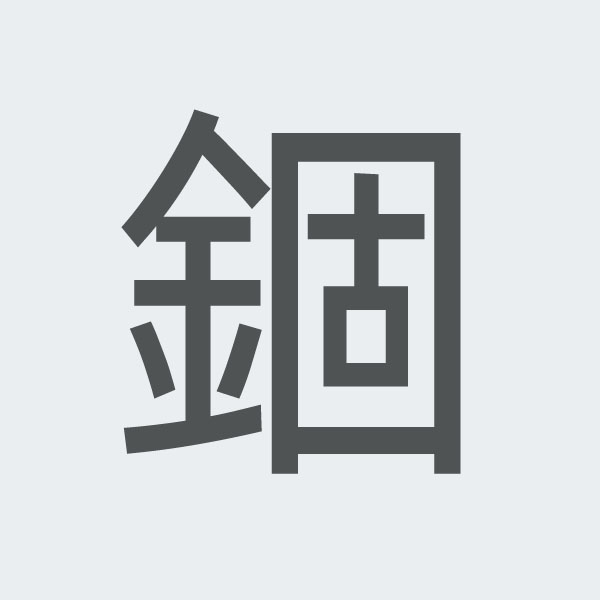
1. Kanji Breakdown: 錮
Meaning: To confine, to imprison, to lock up; rigid, obstinate.
Reading:
Onyomi (Sino-Japanese reading): コ (ko)
Kunyomi (Native Japanese reading): None in common modern use.
The kanji is a phono-semantic compound (形声文字). It consists of two parts:
Left (金): The "metal" radical (かねへん).
Right (固): This means "hard," "solid," or "to harden."
The core concept is "to bind or confine with something as hard and solid as metal." The character vividly depicts the act of using metal (金) to make something fixed and unyielding (固), leading to its meanings of imprisonment, confinement, and rigidity.
2. Stroke Order and Writing (16 Strokes)
Correct stroke order is essential for balanced and legible kanji.
Stroke Order Diagram:
Start with the left radical "金" (metal radical):
Then, write the right part "固":
Key Writing Tips:
Write from left to right, top to bottom.
The left radical "金" is narrow.
The right part "固" is wider. Pay attention to the structure of the "口" components.
Due to its stroke count, careful spacing is key.
3. Core Meanings & Example Sentences
Here are the primary meanings of "錮" with common vocabulary and practical example sentences.
A. To Imprison / Confine (こ)
監禁 (かんきん, kankin)
Meaning: Confinement, imprisonment. Note: While this word uses the kanji 禁, it perfectly illustrates the concept of confinement associated with 錮.
Example: 被害者は部屋に監禁されていた。
English: The victim was confined to a room.
B. Rigid / Obstinate (こ)
頑固 (がんこ, ganko)
Meaning: Stubborn, obstinate, hard-headed.
Example: 私の祖父はとても頑固だ。
English: My grandfather is very stubborn.
固定 (こてい, kotei)
Meaning: Fixed, firm, immovable.
Example: この机は床に固定されている。
English: This desk is fixed to the floor.
C. Specific Compound (こ)
座屈 (ざくつ, zakutsu)
Meaning: Buckling (engineering term). Note: This is a technical term where 屈 conveys the bending under pressure, related to the rigid confinement concept of 錮.
Example: その柱は圧力で座屈した。
English: The pillar buckled under pressure.
Summary
Kanji: 錮
Core Meaning: To Confine, Imprison; Rigid, Obstinate.
Keyword: Confinement, Rigidity.
Readings: On'yomi コ (ko)
Stroke Order: 16 strokes. Structure: 金 (metal) + 固 (hard/solid).
This character is not used in everyday vocabulary but appears in more formal or technical terms related to confinement, rigidity, and stubbornness. Its core imagery of "metal-hard" confinement makes it a powerful character for expressing unyielding states.