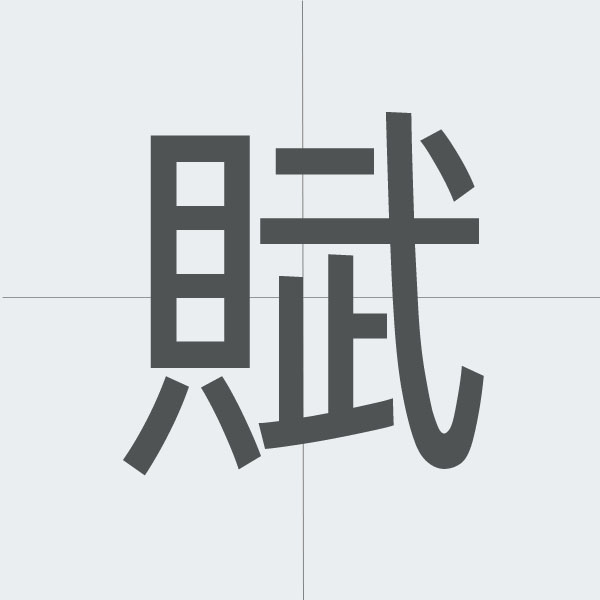
The Kanji: 賦 (Fu)
The kanji 賦 (read as fu) carries nuanced meanings related to "levy," "tax," "composition," and inherent "qualities." It combines the radical 貝 (shell/money) with 武 (military), historically reflecting the imposition of war taxes. This character bridges concepts of imposed contributions and innate characteristics.
Common Words & Example Sentences
1. 税賦 (zeifu)
Meaning: Taxes and levies.
Example Sentence: 税賦の負担が増えている。
(Zeifu no futan ga fuete iru.)
"The burden of taxes and levies is increasing."
2. 賦役 (fueki)
Meaning: Corvée; compulsory labor.
Example Sentence: 古代では賦役が課せられた。
(Kodai de wa fueki ga kaserareta.)
"In ancient times, corvée labor was imposed."
3. 天賦 (tenpu)
Meaning: Innate; inborn; endowed by nature.
Example Sentence: 彼は天賦の才能を持っている。
(Kare wa tenpu no sainō o motte iru.)
"He has an innate talent."
4. 賦活 (fukatsu)
Meaning: Activation; revitalization.
Example Sentence: 経済賦活策が議論されている。
(Keizai fukatsu-saku ga giron sarete iru.)
"Economic revitalization measures are being discussed."
In summary, 賦 is a multifaceted kanji representing both external impositions like taxes (税賦) and internal endowments like innate traits (天賦). It also extends to concepts of activation (賦活), making it essential in administrative, literary, and philosophical contexts.