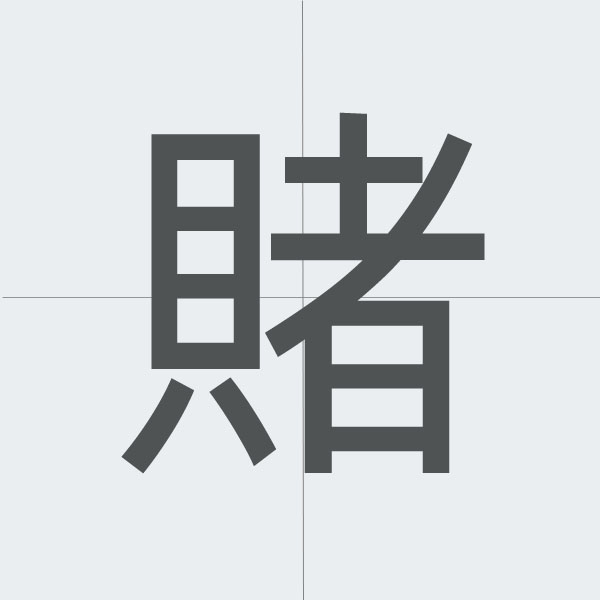
The Kanji: 賭 (To / Ka)
The kanji 賭 means "to gamble," "to wager," or "to bet." It combines 貝 (shell/money) with 者 (person), originally depicting people risking money. This character represents both literal gambling and metaphorical risk-taking.
Common Words & Example Sentences
1. 賭ける (kakeru) - To bet
競馬にお金を賭ける。
"Bet money on horse racing."
2. 賭博 (tobaku) - Gambling
賭博は法律で禁止されている。
"Gambling is prohibited by law."
3. 賭け事 (kakegoto) - Gambling
賭け事で財産を失う。
"Lose fortune through gambling."
4. 人生賭けて (jinsei kakete) - Staking one's life
研究に人生を賭ける。
"Stake one's life on research."
In summary, 賭 describes risk-taking - from monetary gambling (賭ける, 賭博) and betting activities (賭け事) to life commitments (人生賭けて). It conveys the concept of staking something valuable in Japanese.