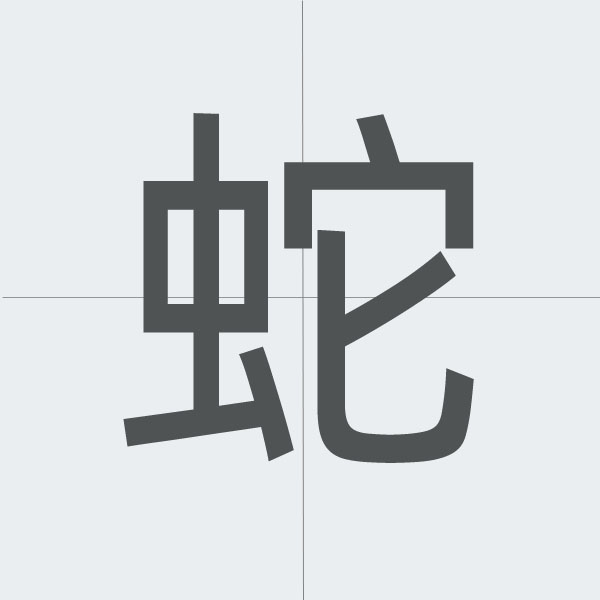
The Kanji: 蛇 (Ja / Da / Hebi)
The kanji 蛇 means "snake" or "serpent." It combines 虫 (insect/reptile) with 它 (snake), clearly depicting the reptile's form. This character represents both literal snakes and metaphorical dangers.
Common Words & Example Sentences
1. 蛇 (hebi) - Snake
草むらで蛇を見つけた。
"Found a snake in the grass."
2. 蛇口 (jaguchi) - Faucet
蛇口から水が出ない。
"No water comes from the faucet."
3. 大蛇 (daija) - Giant serpent
伝説の大蛇が棲む山。
"The mountain where a legendary giant serpent lives."
4. 蛇足 (dasoku) - Unnecessary addition
この説明は蛇足だ。
"This explanation is superfluous."
In summary, 蛇 describes actual snakes (蛇, 大蛇), faucets resembling snake heads (蛇口), and unnecessary elements (蛇足). It connects zoological and cultural concepts in Japanese.