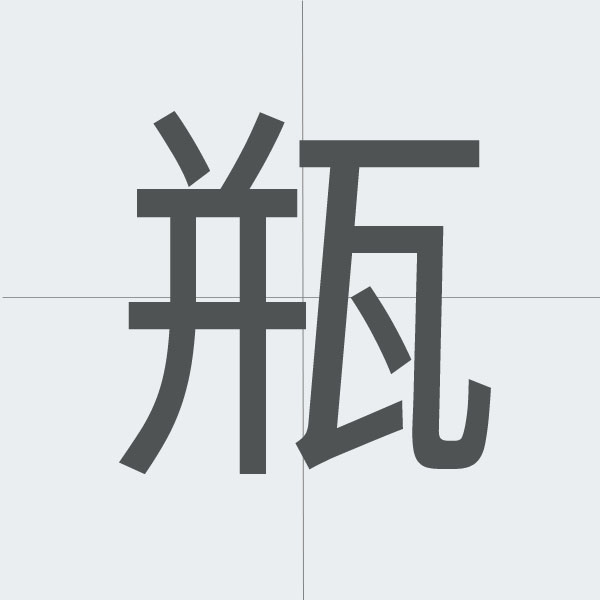
The Kanji: 瓶 (Bin)
The kanji 瓶 (read as bin) simply means "bottle," "jar," or "vase." It is composed of the radical 瓦 (kawara), which means "tile" or "earthenware," combined with the phonetic component 并. This structure reflects its original association with containers made from ceramic or glass materials.
Common Words & Example Sentences
1. 瓶 (bin)
Meaning: Bottle; jar.
Example Sentence: この瓶はビー玉がいっぱい入っている。
(Kono bin wa bīdama ga ippai haitte iru.)
"This jar is full of marbles."
2. 花瓶 (kabin)
Meaning: Vase (for flowers).
Example Sentence: 母は花瓶に美しい花を生けました。
(Haha wa kabin ni utsukushii hana o ikemashita.)
"My mother arranged beautiful flowers in the vase."
3. ビン詰め (binzume)
Meaning: Bottled or jarred food (often written in Katakana ビン).
Example Sentence: このビン詰めのイチゴジャムは手作りです。
(Kono binzume no ichigo jamu wa tezukuri desu.)
"This jarred strawberry jam is homemade."
In summary, 瓶 is a straightforward kanji specifically representing rigid containers like bottles (瓶), vases (花瓶), and jars (ビン詰め), typically made from glass or ceramic.