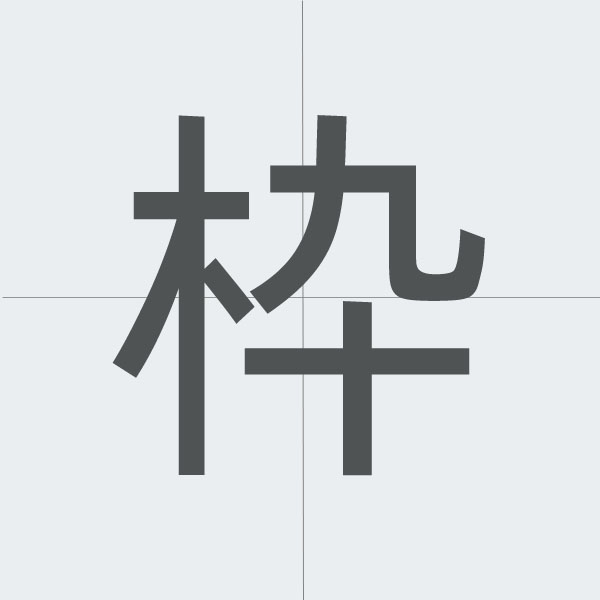
The Kanji: 枠 (Waku)
The kanji 枠 means "frame," "limit," or "boundary." It combines the wood radical (木) with 卆 (complete), originally referring to a wooden frame that gives structure or completes a form. This character represents both physical borders and conceptual constraints.
Common Words & Example Sentences
1. 枠 (waku) - Frame
写真枠に入れる。
"Put it in a photo frame."
2. 範囲枠 (han'i waku) - Scope limit
予算の範囲枠内で計画する。
"Plan within the budget limits."
3. 時間枠 (jikan waku) - Time slot
この時間枠は予約済みだ。
"This time slot is already booked."
4. 思考の枠 (shikō no waku) - Mental framework
固定観念の枠を超える。
"Break free from fixed mental frameworks."
In summary, 枠 describes physical structures like picture frames, conceptual boundaries in scheduling (時間枠), and even psychological limitations (思考の枠). It's essential for discussing constraints and structures in both concrete and abstract contexts.