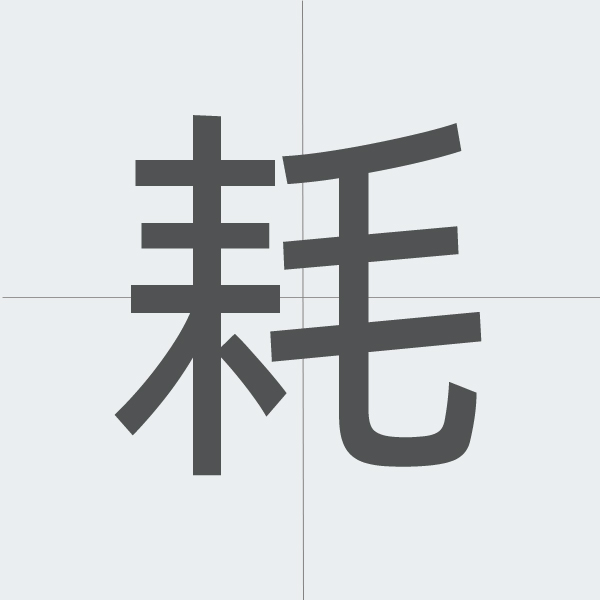
Kanji: 耗 (Mō) - Depletion & Wear
The Japanese kanji 耗 (mō) primarily means "decrease," "depletion," "wear out," or "consumption." It represents the gradual reduction or loss of something, such as resources, energy, or physical material.
Stroke Order & Writing:
Begin with the left radical 耒 (plow): a horizontal stroke, two short verticals, another horizontal, then the left-dot and right-dot.
Write the right component 毛 (hair/fur): a short horizontal, a longer horizontal, then the vertical curve with a hook at the end.
Common Vocabulary & Usage:
消耗 (shōmō): Exhaustion, consumption. "消耗戦は避けるべきだ。" (Shōmō-sen wa sakeru beki da.) - "A war of attrition should be avoided."
磨耗 (mamō): Abrasion, wear and tear. "タイヤの磨耗をチェックする。" (Taiya no mamō o chekku suru.) - "To check the tire wear."
減耗 (genmō): Depletion, loss. "自然資源の減耗が問題だ。" (Shizen shigen no genmō ga mondai da.) - "The depletion of natural resources is a problem."
This kanji is essential for discussing concepts of waste, efficiency, and the gradual deterioration of objects or energy in both everyday and technical contexts.