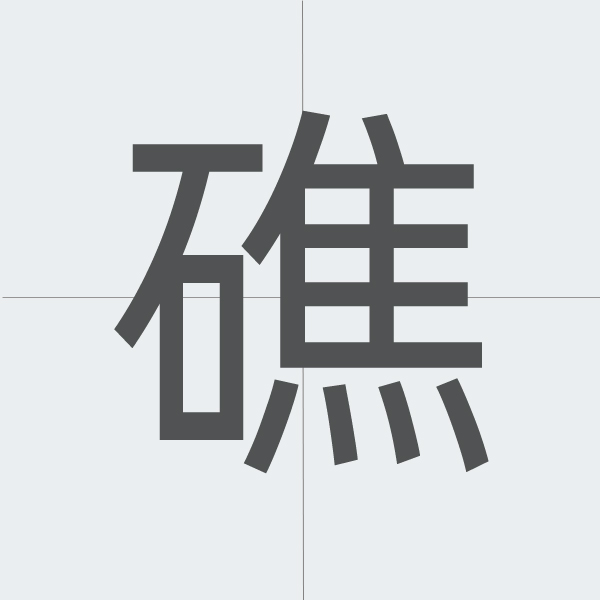
Kanji: 礁 (Shō) - Reef
The Japanese kanji 礁 (shō) means "reef," specifically a rocky or coral reef found in the sea. It is a phono-semantic compound, where the radical 石 (ishi/stone) indicates its meaning, relating to a rock-like formation submerged in water.
Stroke Order & Writing:
Start with the 石 (stone) radical on the left: a horizontal stroke, a downward left-slanting stroke, a vertical stroke, and finally the mouth component (a square).
Then, write the right-side component 焦: write the top-left, top-right, then the four dots (representing fire) at the bottom.
Common Vocabulary & Usage:
珊瑚礁 (sangoshō): Coral reef. "あの海は美しい珊瑚礁で有名だ。" (Ano umi wa utsukushii sangoshō de yūmei da.) - "That sea is famous for its beautiful coral reefs."
暗礁 (anshō): Sunken reef, hidden rock. Also used metaphorically for a hidden obstacle. "交渉が暗礁に乗り上げた。" (Kōshō ga anshō ni noriageta.) - "The negotiations hit a snag (ran aground on a reef)."
岩礁 (ganshō): Rocky reef. "船が岩礁に衝突する危険がある。" (Fune ga ganshō ni shōtotsu suru kiken ga aru.) - "There is a danger of the ship hitting a rocky reef."
This kanji is essential for discussing marine geography, navigation, and is often used in metaphorical expressions for unexpected problems.