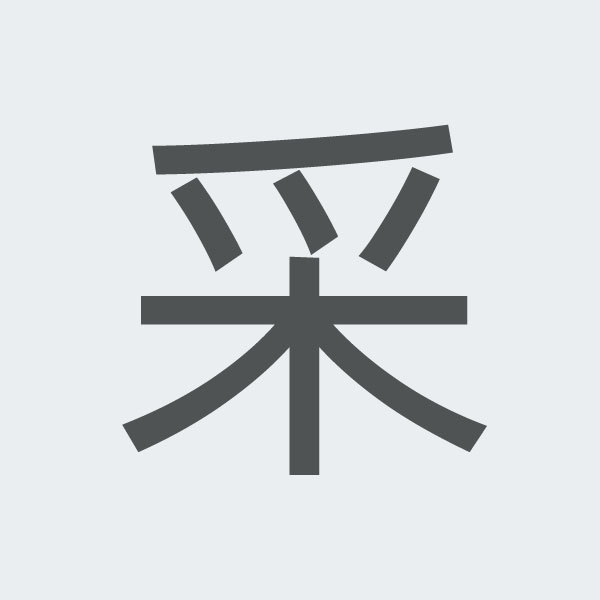
Kanji Breakdown: 采
Core Meaning: Coloring, complexion; manner, style; to gather
Reading: サイ (sai)
Structure Analysis:
爫 (claw): hand action
木 (tree): natural object
Character shows "hand picking from trees" - originally gathering fruits/plants.
Essential Vocabulary & Usage
1. 採取 (さいしゅ・saishu) - Collection, gathering
"They collect mineral samples from the mountain."
彼らは山から鉱物を採取する。
2. 採択 (さいたく・saitaku) - Adoption, selection
"The committee adopted the proposal."*
委員会はその提案を採択した。
3. 風采 (ふうさい・fūsai) - Appearance, manner
"He has a dignified appearance."*
彼は立派な風采をしている。
4. 神采 (しんさい・shinsai) - Divine demeanor
"The master has a radiant presence."*
師匠は神采堂々としている。
Key Insight
采 represents selective gathering and external appearance - originally physical collection (fruits, minerals), now extended to abstract selection (proposals) and personal demeanor. Unlike random gathering (集), 采 implies careful choosing. The character bridges concrete action (collecting) and abstract qualities (appearance/manner).
*Stroke Order: 8 strokes - write claw radical first, then 木 component.*