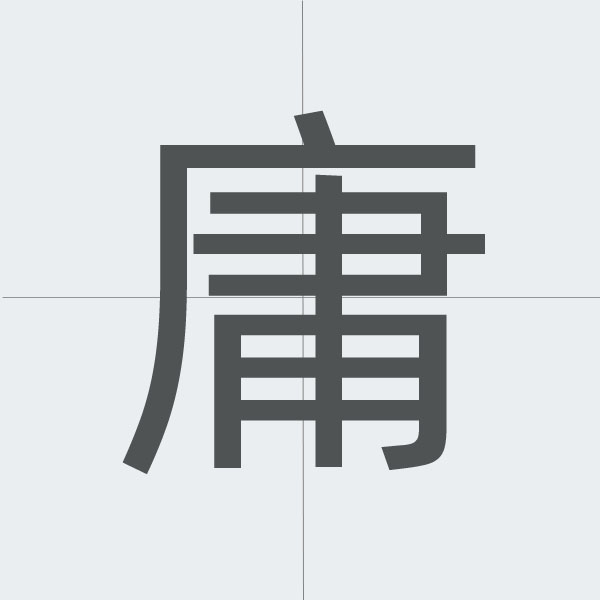
The Kanji: 庸 (Yō)
The kanji 庸 carries meanings of "ordinary," "mediocre," or "to use." It combines 庚 (change) with 用 (use), originally representing practical utility. This character describes commonplace things and functional employment.
Common Words & Example Sentences
1. 平凡 (heibon) - Ordinary
彼の人生は平凡だ。
"His life is ordinary."
2. 中庸 (chūyō) - Golden mean
中庸を保つことが大切だ。
"Maintaining balance is important."
3. 雇用 (koyō) - Employment
会社が新人を雇用する。
"The company hires new employees."
4. 庸才 (yōsai) - Mediocre talent
彼は庸才と評される。
"He is considered mediocre."
In summary, 庸 describes averageness (平凡, 庸才), balanced moderation (中庸), and practical utilization (雇用). While relatively rare, it conveys important concepts about normality and utility in Japanese.