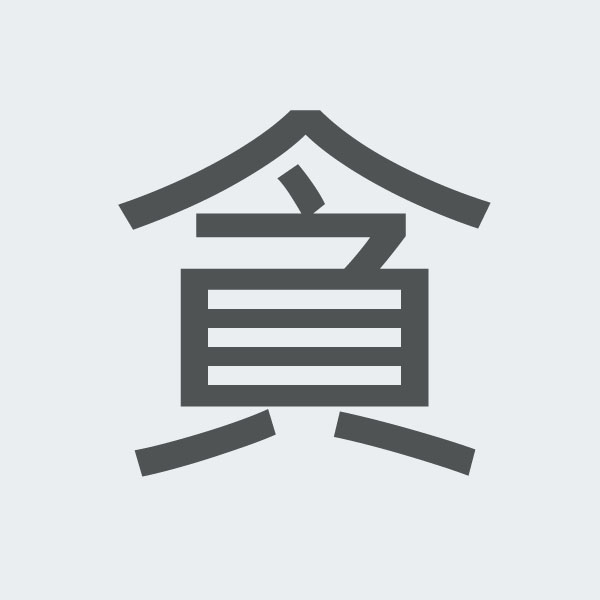
Kanji Breakdown: 貪
Core Meaning: Greed, avarice; to covet; insatiable desire
Reading: ドン (don) / むさぼ・る (musaboru)
Structure Analysis:
今 (now): present moment
貝 (shell/currency): money/wealth
Character depicts "craving wealth right now" - showing immediate, insatiable desire.
Essential Vocabulary & Usage
1. 貪る (むさぼる・musaboru) - To devour, covet greedily
"He greedily devoured the food."
彼は食べ物を貪るように食べた。
2. 貪欲 (どんよく・donyoku) - Greed, avarice
"His greed for power knows no bounds."
彼の権力への貪欲は際限がない。
3. 貪欲な (どんよくな・donyoku na) - Greedy, avaricious
"She has an insatiable desire for knowledge."
彼女は知識に対して貪欲だ。
4. 貪り取る (むさぼりとる・musaboritoru) - To seize greedily
"The corrupt official embezzled public funds."
汚職官僚が公金を貪り取った。
Key Insight
貪 represents destructive, insatiable craving - whether for money, power, food, or knowledge. It carries strongly negative connotations of excess and lack of self-control. The character appears in contexts criticizing materialism, corruption, and uncontrolled desires in both personal and societal contexts.
*Stroke Order: 11 strokes - write top components first, then 貝 radical.*