The Kanji for Moon: A Deep Dive into 月 (Tsuki) - Meaning, History, Stroke Order, and Cultural Significance
The Japanese kanji for moon, 月, is one of the most fundamental and beautiful characters in the written language. Pronounced "tsuki" (つき) in its native Japanese reading and "getsu" or "gatsu" in its Sino-Japanese (On'yomi) reading, this simple, elegant character is a gateway to understanding Japanese culture, language, and aesthetics. If you are searching for the "kanji for moon," looking to write "moon in kanji," or wanting to master the "moon kanji stroke order," you have come to the right place. This ultimate guide will explore every facet of 月, from its ancient pictorial origins to its modern usage and profound cultural symbolism.
Part 1: The Essence of 月 - Meaning and Pronunciation
At its core, the kanji 月 means "moon" or "month." This dual meaning is deeply connected, as the traditional lunar calendar was based on the cycles of the moon, with one cycle constituting one month.
Pronunciations (Readings):
Kun'yomi (Japanese reading): つき (tsuki)
On'yomi (Chinese-derived reading): ゲツ (getsu), ガツ (gatsu)
The choice of reading depends on the context:
つき (tsuki) is used when the kanji stands alone or refers to the celestial body itself.
Example: 月がきれいです。 (Tsuki ga kirei desu.) - "The moon is beautiful."
ゲツ (getsu) is commonly used in compound words, often related to time or astronomy.
Example: 月刊誌 (getsukanshi) - "monthly magazine"
Example: 月曜日 (Getsuyōbi) - "Monday" (Day of the Moon)
ガツ (gatsu) is used exclusively for the names of the months.
Example: 一月 (Ichgatsu) - "January"
Example: 十月 (Jūgatsu) - "October"
Radical and Classification:
月 is its own radical, known as the "月へん (tsuki-hen)" or "moon radical." However, it's crucial to distinguish it from the very similar-looking "肉月 (niku-tsuki)" or "flesh radical," which appears in kanji related to the body (e.g., 肌 hada - skin, 脳 nō - brain). In modern printing, they look identical, but historically, the "flesh" radical was written differently. Context is key to telling them apart.
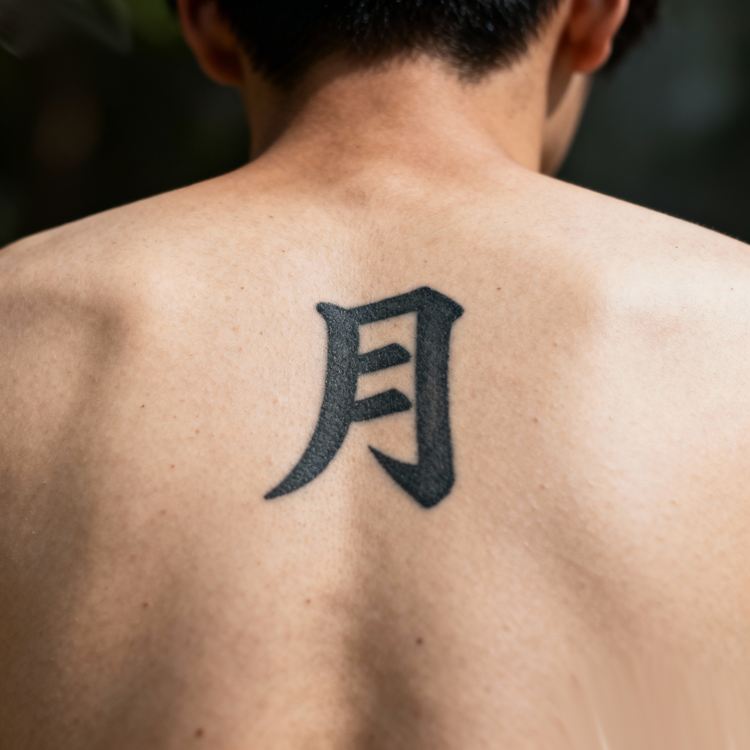
Part 2: Historical Evolution and Etymology - From Pictograph to Symbol
The history of the "moon in kanji" is a fascinating journey of simplification and abstraction. Understanding its evolution is key to appreciating its form.
The kanji 月 originated in ancient China as a direct pictograph of the crescent moon. Ancient oracle bone script (甲骨文, kōkotsubun) inscriptions from the Shang Dynasty (c. 1600–1046 BCE) show a clear depiction of a crescent moon with its horns pointing downward.
Let's trace its evolution:
Oracle Bone Script (甲骨文): The earliest form was a detailed, sideways crescent: ☾. It often included a dot or a line inside the crescent. Some scholars suggest this represented the moon's surface markings, while others believe it was a stylistic device to distinguish it from the character for "evening" (夕).
Bronze Script (金文): The character became slightly more stylized and formalized but retained the crescent shape.
Seal Script (篆書): During the Qin dynasty (221–206 BCE), the character was standardized. The curved lines became more angular and structured, beginning to resemble the modern rectangular shape.
Clerical Script (隷書) and Kaisho (楷書): This is where the character flattened into the square, straight-lined form we recognize today. The soft curves of the seal script were replaced by sharp angles and distinct strokes to suit brush writing.
This evolution from a realistic crescent to a stylized block is a perfect example of how kanji simplified over millennia for the sake of writing efficiency while retaining its core symbolic identity. When you write 月, you are effectively drawing a stylized version of a 3,000-year-old picture of the moon.
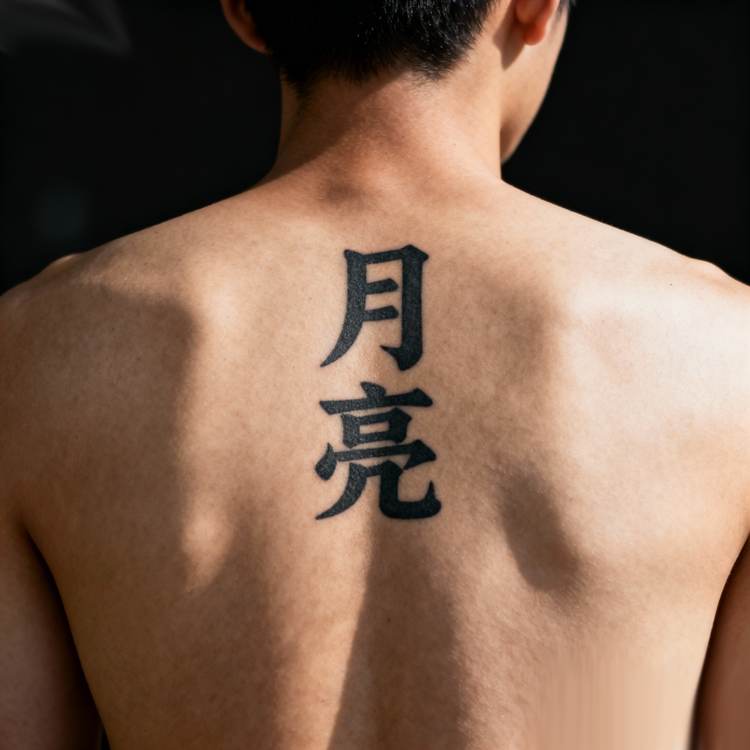
Part 3: Mastering the Moon Kanji Stroke Order
Correct stroke order (筆順, hitsujun) is essential for writing kanji beautifully, balanced, and efficiently. The "moon kanji stroke order" is simple but foundational, as it follows standard rules that apply to thousands of other characters.
The kanji 月 has 4 strokes. It is classified as a closed-right structure.
Step-by-Step Stroke Order Guide:
Stroke 1 (Left Vertical): Start at the top-left and draw a straight vertical line downward. This stroke should be perfectly vertical or have a very slight inward lean at the bottom. It is not a hook.
Rule Applied: Top to bottom, left to right.
Stroke 2 (Right Vertical): This is the most complex stroke. Start at the top-right, just to the right of the first stroke's starting point.
Draw a short horizontal line to the right.
Without lifting the brush/pen, pause and then draw a strong vertical line downward.
As you near the bottom, pause again and create a sharp "hook" to the left. This hook is crucial for the character's balance and serves as a starting point for the next stroke.
Rule Applied: This stroke combines "top-left to bottom-right" and "top-to-bottom" movements.
Stroke 3 (Top Horizontal): Now, inside the box you've created, draw the first of two short horizontal strokes. Start from the left vertical stroke (about a third of the way down) and draw a short line to the right, stopping before it touches the right vertical. It should be parallel to the top.
Rule Applied: Left to right.
Stroke 4 (Bottom Horizontal): Finally, draw the second horizontal stroke parallel to the first. Start from the left vertical, slightly above the bottom, and draw to the right, again stopping before the right vertical. There should be more space between Stroke 3 and Stroke 4 than between the top and Stroke 3.
Rule Applied: Left to right.
Why This Stroke Order Matters:
Balance and Proportion: This order ensures the character is centered and visually pleasing.
Cursive and Semi-Cursive Writing: Correct stroke order is the foundation for fluid, connected writing styles like 行書 (gyōsho).
Muscle Memory: It helps in writing the character quickly and accurately without thinking.
Common Mistakes to Avoid:
Writing the inner strokes first.
Connecting the inner horizontal strokes to the right vertical line.
Making the hook on Stroke 2 too large or too soft.

Part 4: 月 in Context: Common Words and Phrases
The kanji for moon is incredibly prolific. Here are some essential vocabulary words that demonstrate its usage.
As "Moon" (つき):
月 (tsuki): The moon.
満月 (mangetsu): Full moon.
新月 (shingetsu): New moon.
三日月 (mikazuki): Crescent moon (literally "third-day moon").
月明かり (tsukiakari): Moonlight.
As "Month" (げつ/がつ):
今月 (kongetsu): This month.
来月 (raigetsu): Next month.
先月 (sengetsu): Last month.
月曜日 (Getsuyōbi): Monday.
月刊 (gekkan): Monthly publication.
一月 (Ichigatsu): January.
二月 (Nigatsu): February, etc.
In Names and Culture:
月がきれいですね (Tsuki ga kirei desu ne): "The moon is beautiful, isn't it?" A famous, poetic, and indirect way to confess love in Japanese, often attributed to the novelist Natsume Soseki.
月見 (Tsukimi): The Moon-Viewing festival in autumn.
花鳥風月 (Kachō Fūgetsu): A classic idiom meaning "the beauties of nature" (Flower, Bird, Wind, Moon).
Part 5: Cultural and Symbolic Significance of the Moon in Japan
The moon is not just a celestial body in Japan; it is a profound cultural and aesthetic symbol.
Aesthetics and Impermanence (物の哀れ - Mono no Aware): The moon, particularly the autumn moon, is a central image in Japanese poetry and art. Its beauty is deeply tied to the concept of mono no aware—a poignant awareness of the transience of things. The ever-changing phases of the moon symbolize the impermanent, fleeting nature of life and beauty.
Tsukimi (月見): The Moon-Viewing Tradition. Held on the 15th day of the 8th month of the lunar calendar (usually September in the modern calendar), Tsukimi is a festival to appreciate the beauty of the autumn full moon. People display pampas grass (susuki) and offer rice dumplings (tsukimi dango), taro, and seasonal fruits to the moon.
In Japanese Mythology: The moon is home to Tsukuyomi-no-Mikoto, the god of the moon and brother of Amaterasu, the sun goddess. His name itself is written with the kanji 月 (moon), 讀 (to read/be involved with), and 命 (honorific for a god), though it is often simplified. He was born from the right eye of the creator god, Izanagi.
A Symbol of Serenity and Reflection: The quiet, cool light of the moon represents calm, introspection, and enlightenment—a stark contrast to the vibrant, energetic sun.
Part 6: 月 in Calligraphy and Art
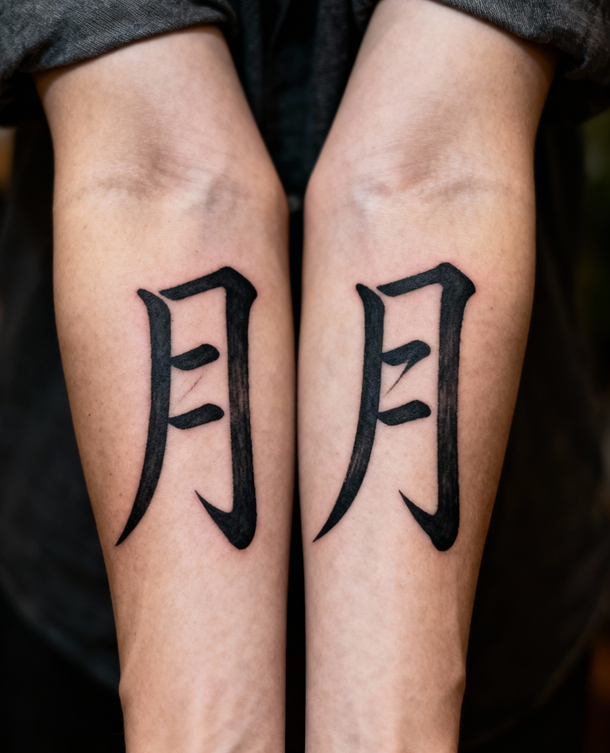
The moon kanji is a popular subject in Japanese calligraphy (書道, shodō). Its simple structure makes it deceptively difficult to master, as every stroke's balance, pressure, and ending must be perfect. Calligraphers practice 月 to hone their control over the brush, particularly the powerful "hook" of the second stroke.
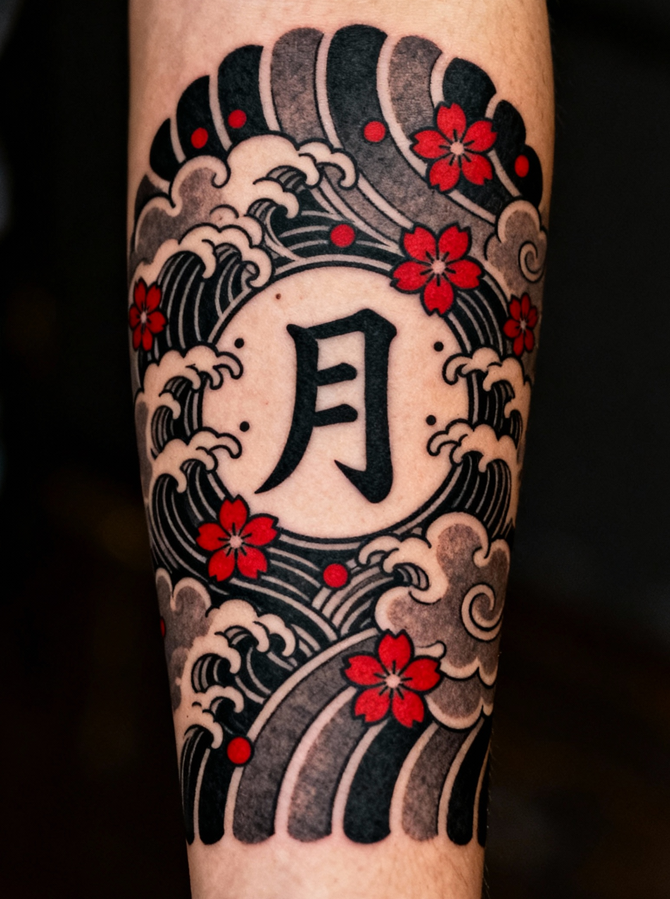
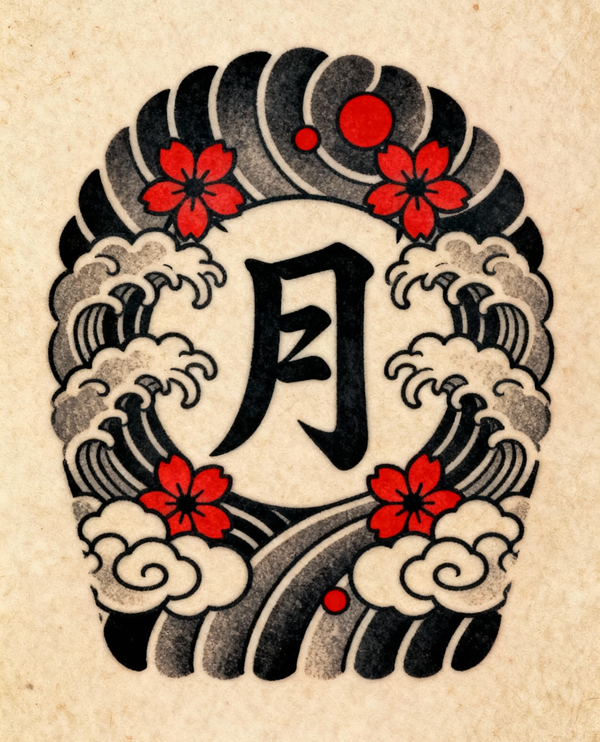
In art, the kanji itself is often incorporated into designs, and the image of the moon is a timeless motif in ukiyo-e prints, screen paintings, and ceramics.
Conclusion: The Enduring Legacy of the Moon Kanji
The kanji 月 is far more than just the "kanji for moon." It is a living artifact of human history, a lesson in linguistic structure, a cornerstone of cultural tradition, and a symbol of profound beauty. From mastering its precise 4-stroke order to understanding its role in poetry and festival, learning 月 opens a window into the very soul of Japanese culture. Whether you are a student, a calligraphy enthusiast, or a curious mind, the journey of understanding this single character is a rewarding exploration of how language, art, and nature intertwine.